


Published: 5 January 2026
There is something enchanting about a rustic bedroom that evokes images of a country cottage or a farmhouse enveloped in the rolling British countryside. Sun-bleached beams, weathered floorboards, softened edges and the muted tones of aged timber instantly signal a space with history.
In an ever-growing world of minimalism, the rustic style offers a warm and textural counterpoint that’s increasingly appealing to those seeking a space that feels welcoming and grounded. It’s a look that doesn’t rely on perfection or polish, but instead draws strength from natural character and a sense of lived-in ease.
This appreciation of age and imperfection echoes the Japanese philosophy of wabi-sabi, which favours the worn, the transient and the beauty found in the unrefined. This naturally aligns with rustic bedroom design, where natural materials and timeless influences create a space that invites you to slow down and reconnect.
In this guide, we uncover key features on how to achieve the perfect rustic bedroom.
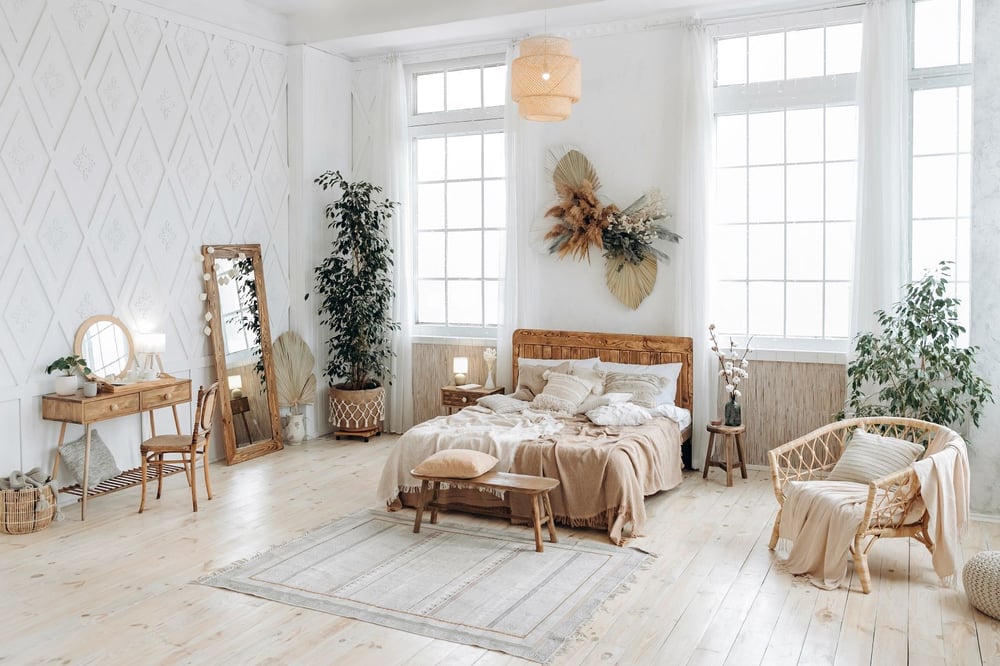
Incorporate Reclaimed and Distressed Wood
At the heart of a rustic scheme is wood that carries history. A headboard, bedframe or accent wall in reclaimed wood immediately introduces character and sets the tone.
Furniture with distressed finishes, from chests, bedside tables or wardrobes, also adds to the authenticity. The aim is not to match everything perfectly, but to allow variation in tone and texture. Even small additions, such as a reclaimed timber stool or a sanded-down bench at the foot of the bed, can shift the style.
Expose Beams and Structural Timber
Ceiling beams, roof trusses or timber rafters exposed rather than concealed lend an architectural honesty typical of rural homes. If the bedroom already has exposed wood, build upon that by keeping other finishes simple, so that the beams take centre stage and form a dramatic focal point. The beams do not need to be perfect, as even a slight roughness or a hint of time only enhances the effect.
Introduce Natural Stone or Brick Accents
To balance wood and lend an elemental quality, many rustic bedrooms incorporate stone or brick. A fireplace clad in natural stone, a part-exposed wall or brickwork detail can anchor the space and subtly reference the outdoors. The contrast between cool surfaces and soft furnishings adds welcome depth to the space.
Build your Scheme Around an Earth-Toned Palette
A muted palette rooted in nature helps tie together rustic features without overwhelming the senses. Warm browns, ochres, soft greens, clay tones, creams and off-whites create a soothing backdrop and allow materials to carry much of the visual weight. The key is that the colour choices should support rather than compete with the textures.
Layer Textiles and Soft Furnishings for Warmth
Cosiness is essential to rustic design and much of that comes from generous layering. Throws, chunky wool blankets, quilts, linen and cotton cushions introduce a softness and tactile contrast to wood and stone. Dressing the bed or a reading chair with inviting layers encourages slow mornings, afternoon naps and a sense of ease that comes from spaces designed to be used and not just admired.
Add Metal and Rustic Iron Accents
Without touches of metal, the look can fall flat. Wrought iron bed frames, aged brass fixtures, lanterns or vintage-effect copper details bring an industrial edge that balances rough-hewn timber. The key is to avoid anything too polished; metal pieces should feel lived-in rather than new.
Choose Lighting that Enhances the Rustic Mood
The right lighting can transform a rustic bedroom into a gently glowing retreat at night. Mason jar fixtures, lantern-style lamps, lantern chandeliers or wall sconces in aged metal can all reinforce the theme.
Soft pools of light are far more effective than bright overhead fittings, especially when paired with textured shades or iron frames. Lighting should feel as though it belongs to the countryside, warm, gentle and with character.
Use Accent Walls and Panelling with Restraint
Instead of covering every surface, many rustic bedrooms benefit from a single accent wall treated with tongue-and-groove, shiplap or reclaimed wood panelling and may be the only natural element needed to shift a bedroom into a rustic style.
The restrained use of wood cladding allows it to become a feature rather than an overload. Similarly, contrasting ceiling panelling can draw the eye upward and frame the space.
Style with Vintage or Upcycled Decorative Pieces
What gives rustic rooms their soul are accessories that speak of time. Vintage rugs in natural tones, found objects, old clocks, upcycled frames or old doors repurposed as a headboard all infuse character. The idea is to collect pieces that tell a story, rather than source everything new.
Opt for Natural Storage and Décor
To complete the rustic look, storage and décor should be unsophisticated and functional rather than overly refined. Wicker baskets, open wooden shelving, simple trunks or crates suit the style perfectly. Linen curtains or hessian panels can be used to soften open shelving without losing the informal spirit. In a bedroom, visible storage should feel like a part of the decor, not hidden behind gleaming fronts.
A successful rustic bedroom comes not from following a strict formula, but from curating materials, textures and objects that evoke warmth, authenticity and ease. Begin with the stronger structural features, such as reclaimed wood, beams or a feature wall, then build up the layers with smaller touches such as textiles, lighting and aged metals.
These gradual additions, rather than a single overhaul, can be just as effective and, when chosen with care, accumulate into something far more convincing than any off-the-shelf scheme. What matters is that each element feels as though it belongs, not because it matches, but because it has a story, a visual weight and a sense of place.