As a custodian of historical milestones, a site of seismic cultural revolutions, and the torchbearer of monarchy, London is full of profound tales. Every nook and cranny of London guards whispers of the bygone and traces of a rich history, testifying to the city’s magnetic allure.
The Best Walking Routes in London
From monuments to museums, and promenades to exultant forests, an exploration of the city would certainly furnish a kaleidoscope of wonders – especially on foot, there is immense potential to savour the splendour of London. Read on to discover some of the best places to walk in London.
Located on the southern bank of the River Thames, South Bank is an entertainment district in London. A 6-kilometre-long strip of land along the river, famously known as the South Bank Walkway, offers arresting views of London’s prized waters and other heritage sites. Victorian lamp posts depicting marine animals, known as “dolphin lamp posts,” dot the path. Visitors can start at Tower Bridge and head westwards along the river – one is in for feastly views of London Bridge, the Tower of London (a castle dating back to the 10th century), and HMS Belfast (a Royal Navy vessel that served in the Second World War).
At the end of the embankment lies the Albert Bridge, which tapers into Battersea Park’s greens. This bridge is particularly glorious at night, aglow in 4000W fairy lights. It is known as “the trembling lady,” as it is an old, shaky bridge. Upon entering Battersea Park, a walk along the promenade will acquaint visitors with the Peace Pagoda, London’s Buddhist Temple. The Nipponzan Myohoji Buddhist Order gifted the Pagoda to London’s people in the 1980s.
3. Cox’s Walk in Sydenham Hill Wood
Typically, Sydenham is never on anyone’s London itinerary, notwithstanding its natural reserve’s rugged beauty. Home to more than 200 species of trees, plants, and rare fungi, in addition to bird species and mammals, Sydenham Hill Wood is part of the Great North Wood (formerly a lush common sprawling a large chunk of south-east London). Within this wood lies an oak tree-lined avenue, which is known as the Cox Walk.
From there, through the Regent’s Canal and Camden Town, the Greenway connects to Victoria Park in east London. The route continues further east, covering Woolwich and Greenwich. Finally, it enters the city’s centre by running through South Bank and Tower Bridge, ultimately circling back into St. James’s in the west. Enthusiastic tourists, marathon runners, and cyclists enjoy covering this ring which meanders through all the upscale ends of the city. Brimming with heritage sites, riverfront haunts, and cultural milestones, the Jubilee Greenway flaunts the best of London.
5. Abney Park to Hackney Marshes
The Abney Park to Hackney Marshes walkway is part of a larger walking trail known as the Capital Walk, which is a 125-kilometre walk linking London’s green spaces and nature reserves. Abney Park to Hackney Marshes is a 5.2-kilometre stretch. Visitors will encounter the Clissold Park, an open green full of fine trees and a mediaeval manor house; the Hackney Brook; the Walthamstow Marshes, a biological “Site of Special Scientific Interest” with unique species of plants and animals; and the Abney Park Cemetery, one of London’s “Magnificent Seven Cemeteries.”.
Tucked away in the verdant terrain of North London, Parkland Walk is a 5-kilometre path that connects Finsbury Park and Alexandra Palace along the course of an extinct railway line. The stretch covers Stroud Green, Crouch End, Highgate, and Muswell Hill. It bears the badge of “Metropolitan Importance for Nature Conservation,” besides being London’s longest natural reserve.
7. Little Venice to Camden Lock
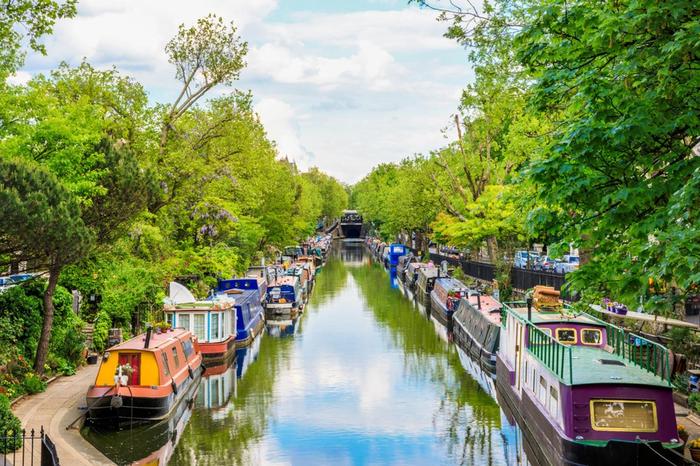
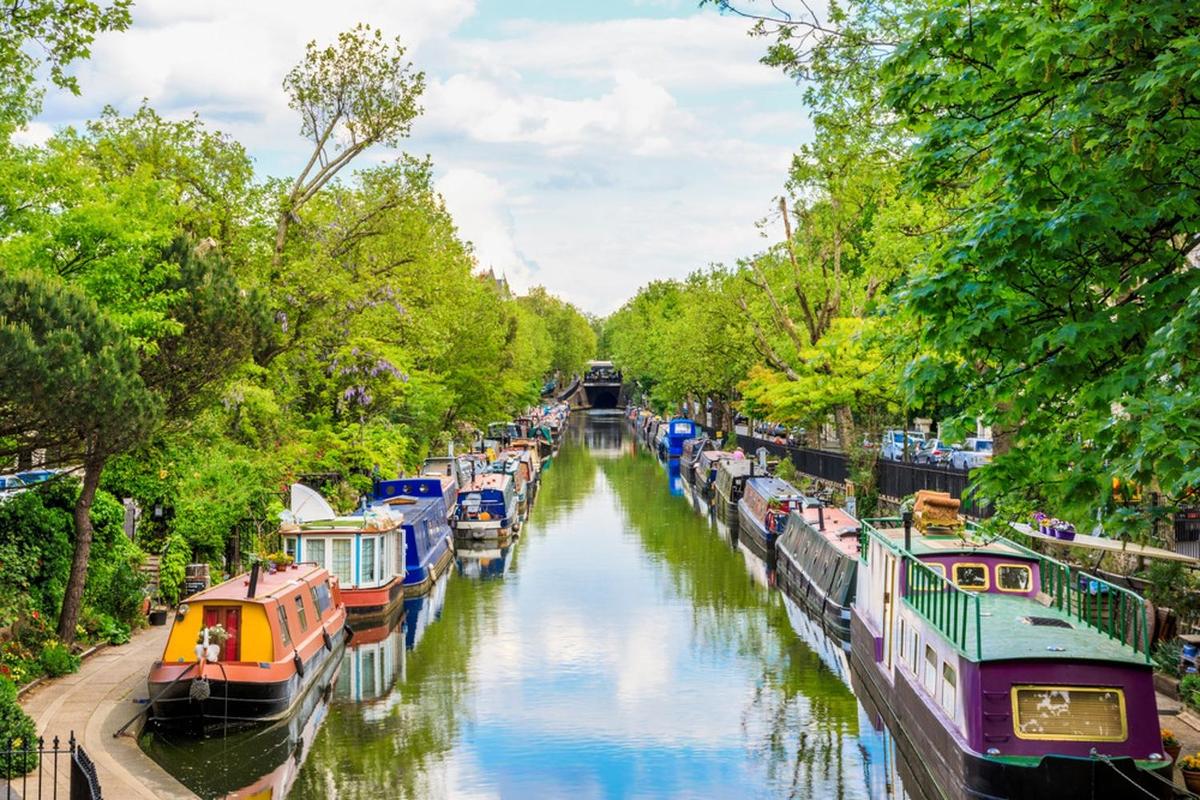
A treasured stretch in north-west London, the route from Little Venice to Camden Lock is a tranquil sojourn along the Regent’s Canal. The trail path begins at the riverside of Little Venice, which is dotted with Regency stuccos and docked boats, and goes past the Warwick Avenue Bridge. A short hike past the gondolas, riverbound cafes, and street musicians will lead to the edge of Regent’s Park, a florid pleasure garden designed by John Nash in the early 19th century.