

Published: 9 January 2026
Celebrating heritage, colour and fearless fashion on London’s greatest street party
Every August Bank Holiday weekend, the streets of West London, from Ladbroke Grove to Westbourne Park, erupt into an unforgettable display of music, dance and dress. Notting Hill Carnival is more than a party; it is Europe’s largest street festival, the world’s second-largest carnival and a living testament to Caribbean culture, community resilience and creative expression. Drawn from the rhythms of soca and calypso, the thump of steelpan and the sparkle of mas bands, the Carnival is as much about what people wear as what they hear and eat.
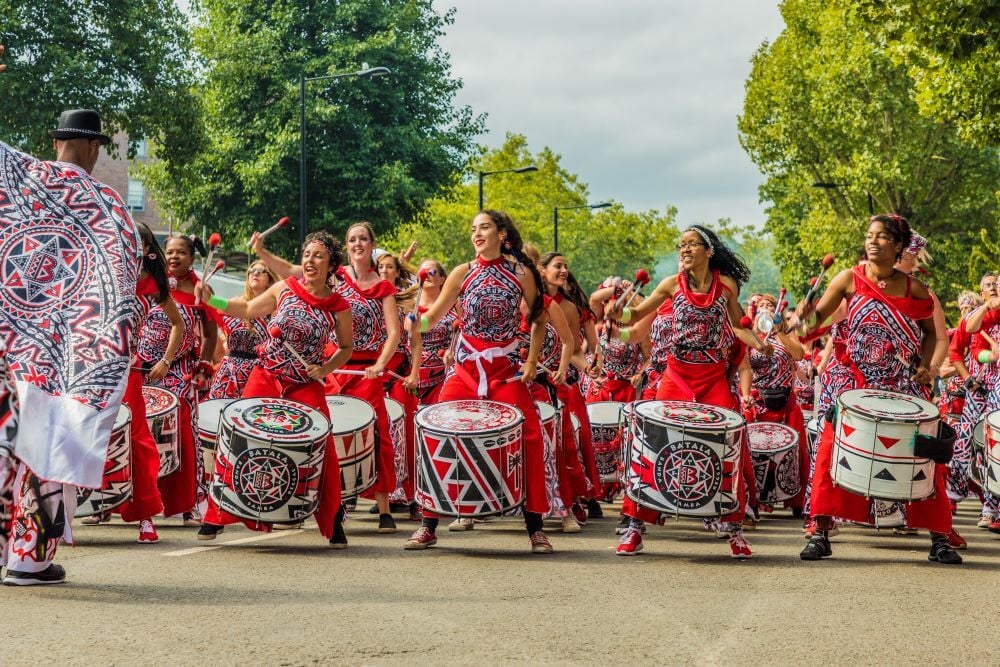 image source: Chrispictures / Shutterstock.com
From Protest to Parade
The Carnival’s origins trace back to the post-Windrush era, a time marked by social marginalisation for British Caribbean communities. In 1959, Trinidadian activist Claudia Jones brought Caribbean carnival traditions to London in an indoor festival at St Pancras Town Hall, creating a cultural counterweight to the Notting Hill riots of the late 1950s.
By 1966, what began as a street party for local families had grown into a full-blown Carnival. Early celebrations fused spontaneous street dancing with steel bands roaming the roads; by the 1970s, masquerade costumes rooted in Caribbean heritage became standard and the event began drawing crowds of thousands each summer.
The Role of Costume and Colour
Outfits at Carnival are not incidental, they are essential. From electrifying feathers to dazzling sequins, painted bodies to expressive streetwear, fashion here is a form of celebration and community storytelling.
Carnival fashion has always been political, whether intentionally or not. Born as a response to racism and exclusion, it transformed dress into declaration. To take up space, to be loud, decorative, sensual and unapologetic in public was and remains an act of resistance. Nearly six decades on, that spirit still shapes how people show up. What you wear at Carnival is often a statement of who you are, where you come from and who came before you.
In 2025, that message felt especially clear. Last year’s street style leaned into confidence rather than novelty: reworked sportswear, layered colour stories and outfits built for endurance as much as impact. Comfort was not the opposite of style but its foundation — trainers, thigh bags and breathable fabrics forming the base for looks that still delivered drama. For 2026, these lessons remain central.
Look to the Past and Last Year: Styles for 2026 Inspiration
1. Carnival Mas Costume Revival
There is nothing quite like a mas costume to announce your arrival. Traditionally worn by carnival “masqueraders”, these elaborate creations of feathers, beads and sculptural headpieces are designed for movement, dancing with the body and catching sunlight as well as camera flashes.
In 2025, mas bands reminded us of the power of collective visual impact: coordinated colour, rhythm and motion turning the streets into a living artwork. For 2026, take cues from classic mas themes, but personalise within them:
-
Feathered wings and plumed headpieces evoking birds, spirits and freedom
-
Hand-beaded appliqué and bold motifs in primary or heritage-inspired colours
-
Statement shoulders or back pieces echoing Caribbean pageantry
Mas costume makers spend months on these pieces and joining a mas band such as ABIR or ARAWAK remains the most immersive way to experience Carnival fashion at its source.
2. Neon Street Style
A more accessible route, neon and vibrant co-ords dominated large parts of the Carnival last year. Electric pinks, cobalt blues and fluorescent greens played off the intensity of the streets, often layered rather than worn as single statements.
For 2026, inspiration lies in:
-
Neon bike shorts or skirts grounded with a neutral or heritage colour
-
Rainbow or metallic belt bags worn high and secure, as seen everywhere in 2025
-
Lightweight, breathable fabrics that can withstand August heat and hours on the road
3. Elevated Streetwear
Style at Carnival does not have to be costume-centric. One of the clearest takeaways from 2025 was the rise of elevated streetwear with everyday pieces transformed through cut, customisation and intentional styling.
Pieces that continue to inspire for 2026 include:
-
Sequinned or embellished mini dresses paired with sturdy trainers or boots
-
Reworked vests, jerseys or cargo trousers customised with mesh, crystals or cut-outs
-
Monochrome outfits styled with one bold accessory, such as a bucket hat, statement jewellery or vibrant socks
This approach suits those who want to honour Carnival’s spirit while dressing instinctively and practically.
As Carnival returns this year, it does so with the same defiant energy that has carried it for nearly six decades. Fashion on the streets of west London will once again reflect more than taste or trend: it will speak to heritage, adaptability and collective joy. In a summer shaped by constant change, Notting Hill Carnival remains one of the few spaces where style is worn for movement, for meaning and for celebration.