

Published: 1 June 2026
Horse trading has run parallel to the progress of all civilisations. It began thousands of years ago as an essential way to employ the newly domesticated animals as a mode of transport, tools for agriculture and even as weapons of military might. In Ancient Egypt, they were often controlled by the Pharaohs and used as diplomatic gifts to cement their elite status. In Greece and Rome, formal trading markets began to move horse stock all over Europe and North Africa for use in chariot racing and ceremonies. It was during this time that written contracts and breeding records began to appear, which are still in use in the modern bloodstock industry of today. Pedigree with provenance was now a financial asset and the finest examples brought the biggest rewards at auction.
In the 21st century, elite horse trading operates well within the luxury asset class amongst fine art, classic cars, rare wines and the vanishing stock of ultra-rare whiskies. Here is a guide to the most expensive horses ever sold that sit at the absolute pinnacle of this market.
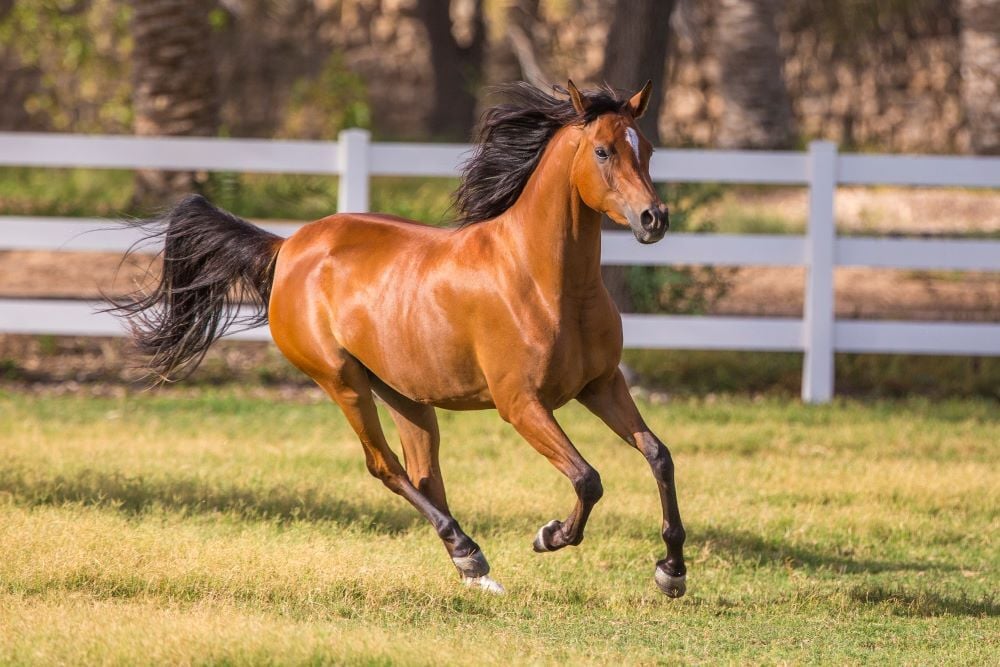
1. Fusaichi Pegasus
In 2000, the bay stallion Fusaichi Pegasus was presented at auction as the ultimate thoroughbred investment and reportedly fetched an astonishing $70 million. This incredible specimen was foaled in 1997 by the Kentucky breeder, Arthur B. Hancock III and was always destined for great things as the name would suggest.
The sale came in the same year that Pegasus had claimed victory in the Kentucky Derby, renowned as the jewel in the American Horse Racing Crown. It was purchased by the Irish breeding empire Coolmore Stud because of his on-track success and his pedigree as an elite breeding asset. It was widely expected that the superior genetic chain evident in Pegasus would make him a stud to bring multi-generational success to the stable. Having sired multiple stakes winners and contributing to the bloodstock landscape for a quarter of a century, it looks like that was exactly what came to pass. The sale was the perfect bridge between performance-related valuation and long-term asset procurement.
2. Justify
Winning the Triple Crown in a single season is a surefire way to capture the attention of the elite horse-trading world. The races of Kentucky Derby, Preakness Stakes and Belmont Stakes represent the standout events of the American horse racing calendar, and all eyes are on the finishing line to see which horses are in the running. Justify completed this rare racing feat in 2018 and jumped straight to the top of the pedigree pile with a clamour for his purchase quickly following.
The market fever reached a peak for Justify that Coolmore Stud were happy to spend a reported $60 million specifically for his breeding rights in a deal that would eventually rise to almost $75 million in certain accounts. Justify was retired to stud and began his breeding career at Ashford Stud, the Coolmore base in Kentucky, acting as another trophy horse in their stables. He will undoubtedly now shape the bloodline of many winners to come in this decade and beyond.
3. Shareef Dancer
It may seem commonplace now to see eight-figure prices for prize specimens in equine auctions. However, over 40 years ago these figures were astronomical and transformative for the pedigree horse trading market. Shareef Dancer was an exceptional colt with an impeccable pedigree, as sired by the legendary Northern dancer, that reached £40 million in 1983.
It was an epoch-making purchase by Sheikh Maktoum bin Rashid Al Maktoum, a key figure in building the enviable horse racing and bloodstock presence that Dubai now holds. This set a world record at the time and symbolised how serious the Middle East was taking the ultra-elite bloodstock market. Other examples of Northern Dancer’s offspring had begun to dominate pedigrees around the world, and it was clear that despite his modest race earnings, Shareef Dancer would be an incredibly valuable stud.
This proved more than accurate as he fully sired multiple stakes winners and even held an important influence as a damsire, the horse breeding equivalent of a grandfather, to future generations.
4. The Green Monkey
The combined bloodlines of Northern Dancer and Secretariat present a remarkable pedigree for a horse. They also encourage incredibly high expectations and a value to accompany it. When The Green Monkey entered the auction at the Fasig-Tipton Calder sale in 2006 the market was waiting with bated breath. The bidding war that ensued raised the hammer price to $16 million before striking down with a resounding sale to Coolmore Stud. This made The Green Monkey the most expensive horse ever to be sold at public auction at the time.
Perhaps understandably this thoroughbred never quite reached the promise of expectation that weighed so heavily upon him in his race career. However, he did contribute significant long term value through the progeny he sired eventually. The Green Monkey serves as a gentle reminder that despite such breeding there is always an inherent risk to any purchase at the very top of this constantly developing market.
5. Seattle Dancer
Yearling trading is a key element to the elite horse trading market where buyers can evaluate the development of a horse with established pedigree. In 1985 Seattle Dancer was clearly a yearling of incredible stock with his dam, My Charmer, producing the Triple Crown winner, Seattle Slew. As if that was not enough, his sire was the 1970 Triple Crown winner, Nijinsky, who had become one of the most important stallions of the 20th century.
However, not many could have predicted that Seattle Dancer would become the owner of the world record yearling purchase record of $13.1 million. He was bought for that figure by a high-profile international partnership that included Susan Magnier, one of the most influential figures in the thoroughbred breeding and racing worlds. A solid if not spectacular racing career followed before he retired to stud and sired offsprings that would accumulate almost 40 stakes wins.
These prices reflect the status and high stakes of the elite horse trading industry in the modern world. They also demonstrate the commitment, dedication and costs that attend the breeding process of such pedigree creatures. A select few stables and partnerships are ensuring that the most prestigious bloodstock will be visible at the most prestigious races for generations to come.