


Published: 13 October 2026
Most of London's garden squares can be looked at but not walked into. The gardens are usually controlled either by the estate that built them or by the people who live around them, and the gate opens with a key issued by a garden committee. Passers-by look in through the railings; residents let themselves in. That simple arrangement goes a long way towards explaining why estate agents treat a square address as a category of its own.
From pasture to piazza
The arrangement is an old one. The London square began in 1631, when the Earl of Bedford engaged Inigo Jones to lay out Covent Garden on former grazing land, borrowing the formal grandeur of the Italian piazza. Lincoln's Inn Fields followed within the decade, and Bloomsbury Square in 1661. Over the next two centuries, landowning families – the Grosvenors in Mayfair and Belgravia, the Russells in Bloomsbury, the Cadogans in Chelsea – carved their estates into terraces arranged around enclosed gardens, often writing into building contracts that the central ground must stay green. The ideal was rus in urbe: the country in the city, a tamed fragment of meadow kept for the pleasure of those whose windows looked onto it.
Who gets a key
That pleasure was never evenly shared, and the squares have long carried the weight of the city's arguments about who belongs where. When the railings were taken for scrap at the start of the Second World War, the gardens stood open for the first time in living memory; George Orwell, writing in Tribune in 1944, greeted their return as a restoration of the old order, keyholders back inside and poorer children shut out. Decades earlier, the reformer Octavia Hill had campaigned for neglected squares to become gardens for everyone, and in 1874 a sooty, overgrown Leicester Square was handed to the Metropolitan Board of Works and reopened to the public. Many others never were. The London Squares Preservation Act of 1931 saved several hundred squares from the builders – but it preserved their gates, too.
What buyers are paying for
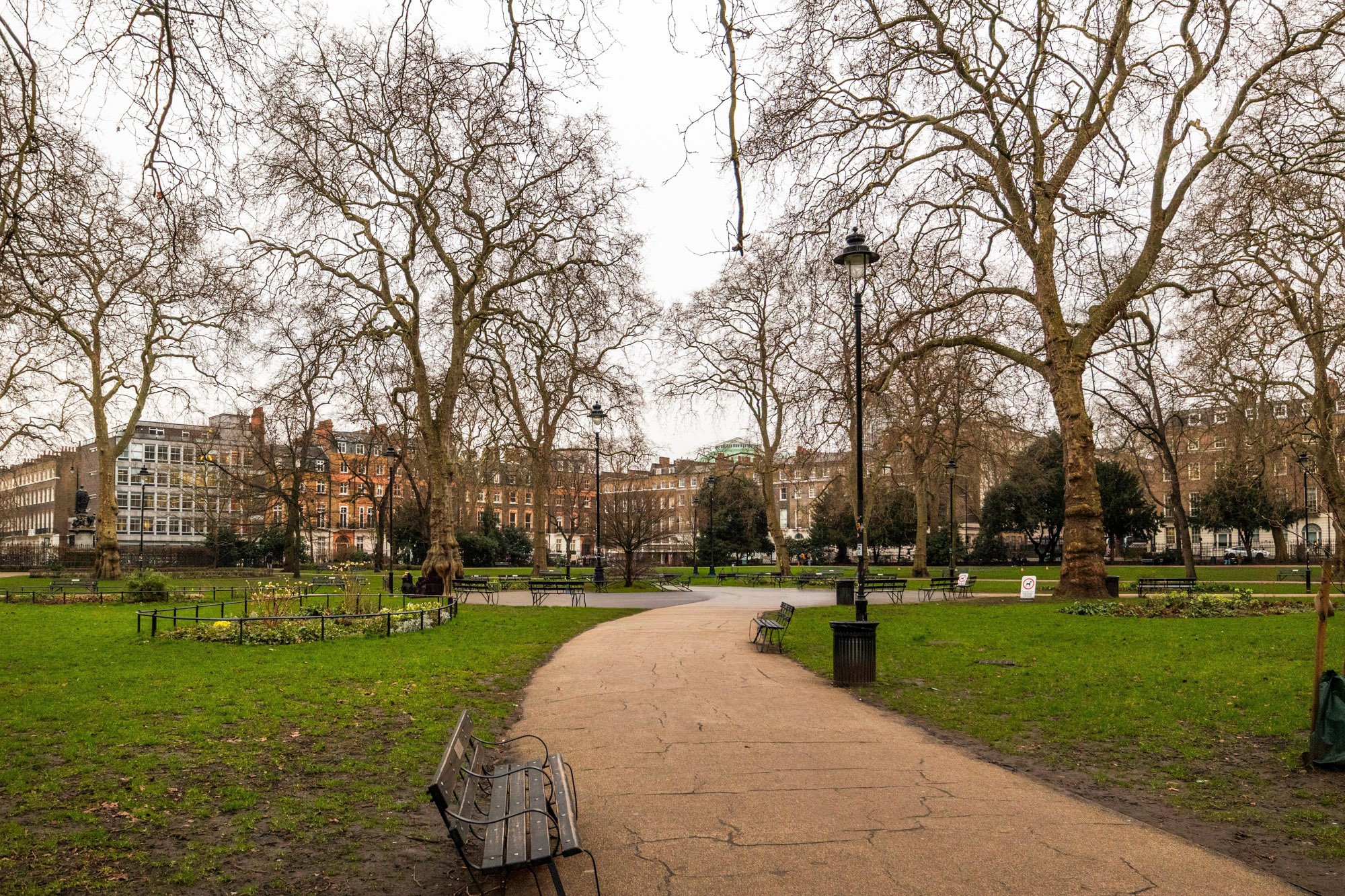
It is precisely this tension, between public view and private access, that gives a garden square home its peculiar allure today. The garden belongs to the street in the sense that anyone may admire it through the railings; it belongs to the residents in the sense that only they may sit beneath its trees. Buyers pay for both. Agents speak of a square premium with the confidence of people who have watched it hold through every market cycle, and it is not hard to see why. A house facing a garden square enjoys a borrowed landscape: mature London planes, clipped box and lawns that no developer can touch, tended by a committee rather than a single exhausted owner. In a city where outdoor space is measured in square feet, it is a park by proxy.
Life on the committee
The practicalities are less romantic, and more revealing. Most squares are run by garden committees, funded by an annual rate levied on surrounding households, which settle questions of opening hours, dogs, and whether a long-condemned lime may finally come down. Some still bear the marks of their origins: old rules forbidding nursemaids to loiter, or ancient trees that predate the terraces and were simply left standing when the fields became streets. Joining a square is, in a small way, joining a society – with its minutes, its quarrels and its summer parties beneath strings of lights.
Beyond the West End
Not every square conforms to the image of hushed exclusivity. Bloomsbury, long a muddled middle ground in the Victorian social imagination – respectable on one street, disreputable on the next – is now a district of academics and publishers, its gardens shared between residents, students and office workers eating lunch on the benches. In Islington and Notting Hill, Victorian speculators reproduced the West End model for a rising professional class, and those squares now command prices their builders could scarcely have imagined. Each June, the Open Garden Squares Weekend unlocks dozens of private gardens to visitors: an annual reminder that the city still wonders what lies beyond the hedges.
The long view
What buyers are really acquiring, perhaps, is continuity. The terraces around the great squares have outlived the families who commissioned them, been carved into flats and restored into houses again, survived bombs, neglect and the rise and fall of whole neighbourhoods. The garden at their centre has persisted through all of it: replanted, argued over, fenced, opened, fenced again. To live on a square is to become the latest custodian of a long conversation about how Londoners might want to live, and with whom.
And then there is the key. It may sit in a kitchen drawer for months at a time, but its presence changes the house. On a warm evening it means a lawn a few steps from the front door; on a winter morning, a view of bare branches against a pale sky where another house might have stood. It is a small object that carries four centuries of London's history – aristocratic ambition, social reform, stubborn privilege – and it remains, for those who hold it, one of the city's most discreet forms of prestige.