

Published: 18 December 2025
For those who love cricket, Lord’s holds near-mythic status. A much-beloved home of the sport since 1814, Thomas Lord established the final incarnation of his cricket venue on a parcel of Marylebone land that would later become synonymous with cricket for the next two centuries. In the time since its foundation, the ground has evolved from a modest field into the internationally recognised headquarters of the sport in the UK.
While other stadiums have chased spectacle, Lord’s has cultivated a reputation based around ritual and tradition. Its pavilions, long rooms, and galleries were conceived less as spectator facilities and more as purposeful spaces dedicated to the rites of the game for its members. The result is that the venue goes beyond sport, into a very personal community.
The Pavilion and Members’ Spaces
Walking into Lord’s, visitors encounter architecture that deliberately blends the original’s early 19th-century identity with the present day. The ground’s profile is instantly recognisable due to the old Pavilion. Seating is arranged with sightlines that place the field at eye level, a subtle design choice that really adds to the atmosphere and intimacy of a match, especially with a dubious call from the umpires. The Pavilion is the core at the centre of Lord’s, a red-brick Victorian structure completed in 1890 with ornate balcony panelling, honed timber interiors, and private chambers for members deep within.
One such room is the Long Room, a grand, wood-panelled gallery adorned with portraits of cricketers, MCC nobles and historic patrons, acting as both a trip down memory lane and a premier members’ viewing space. Beyond the Long Room, a labyrinth of members’ spaces supports hospitality that is deeply rooted in etiquette. Dress codes, guest restrictions, and behavioural expectations maintain an exclusivity that has, rightly or wrongly, become part of the Lord’s brand. Members’ bars offer tiered seating arrangements, brass fixtures, and polished oak counters where match-day conversation is as central to the experience as cricket itself. Balconies, terraces, and reserved dining salons provide uninterrupted views of the field, while the atmosphere is characterised by quiet confidence, rather than the festival energy seen at other grounds.
A More Modern Arena
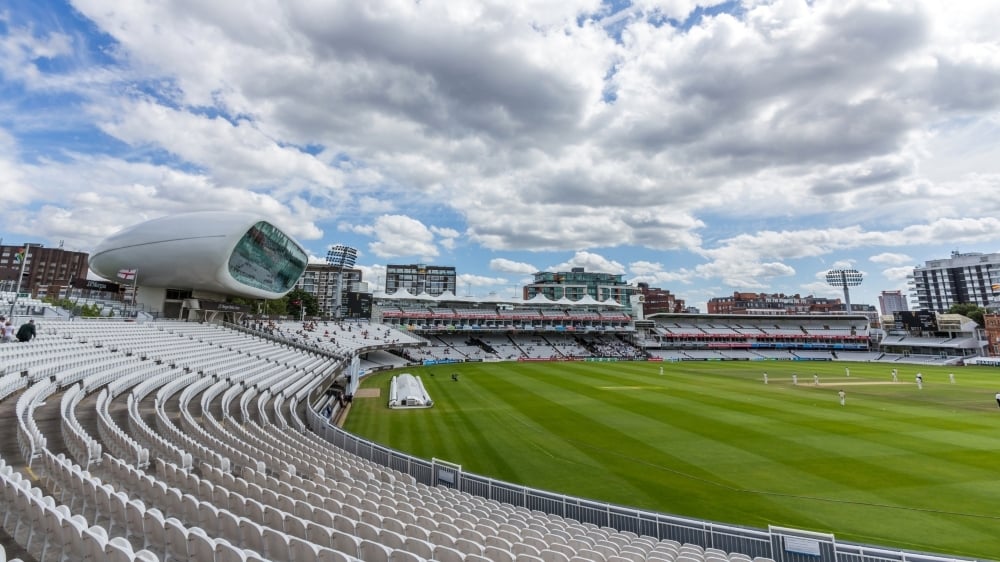
Directly opposite the Pavilion sits the aluminium-clad structure commissioned to modernise Lord’s profile ahead of the 1999 World Cup – the Media Centre. Assembled using boat-building technology, it provides panoramic views through angled, edge-to-edge glass, enabling broadcasters to capture match visuals without obstruction. In functional terms, it improved Lord’s operational capability, offering press and analysts dedicated commentary pods, meeting rooms, and production suites that align with modern broadcasting demands to sharpen Lord’s image around the cricketing world.
The stadium’s bowl is flanked by stands that vary in age and configuration, reflecting incremental renovation rather than wholesale redevelopment across the last two centuries. The Warner, Grand and Compton stands have been upgraded with expanded seating capacities, improved leg room, and circulation routes designed to minimise queuing. Hospitality suites sit behind glass-fronted façades, with private boxes offering dining tables, tiered seats, and in-suite service during play. Outdoor bars serve draught beer and food stalls operate on concourses, though the ground retains a preference for seated dining, reflecting Lord’s character and status as an institution.
Preserving Cricketing Heritage
The MCC Museum, located behind the Pavilion, is one of the oldest sporting museums in the world, housing artefacts that trace cricket’s evolution from a casual aristocratic pastime to global sporting status. Among its impressive collection of artefacts, centuries-old bats, Test memorabilia, and original documents chart changes in the laws that helped govern the game up until the present.
Within this environment, the contents of polished glass cabinets, including handwritten letters, aged photographs, and even the Ashes urn itself, give the museum an archive-like feel. Tours are available outside match days, allowing visitors additional access to other areas such as the Long Room, the Dressing Rooms, and the chance to stand on the Pavilion balcony overlooking the ground for the best view in the house.
But nothing quite compares to the hallowed turn laid at the ground. Lord’s pitch is world-renowned for its pronounced slope, running from the Pavilion to the Nursery End, at a gradient rarely seen in elite sport and subtly altering match dynamics. Bowlers carefully adjust their aim, batsmen judge bounce differently, and captains strategise around prevailing wind and sun positions all the more rigorously. Grounds staff maintain a grass surface that is firm, fast, and prepared to reward both seam and spin depending on moisture levels. Outfields are trimmed to elite standard, ensuring quick ball travel and high-scoring potential when conditions favour batsmen.
Adjacent practice wickets and training facilities separate elite players from public spaces, offering dedicated performance environments for tests, county fixtures, and international warm-ups. Indoor nets, gym spaces, and physiotherapy rooms are integrated into the Pavilion complex, ensuring players never have to leave the near holy ground to prepare for a match.
Beyond Sport
Lord’s operates as a multi-tiered commercial venue, with private dining rooms, corporate boxes, and large-format event spaces that can and do quite often play host to functions outside match days. Corporate hospitality packages are available for uninterrupted views, with boxes featuring patios and glass-fronted lounges offering controlled environments.
Lords plays host to all manner of galas and charity events, cementing its status as a major location for all occasions in London. But when the lights go down and the gates close, Lord’s disappears back into residential quiet, reinforcing its identity as a grounded, beloved cricketing institution known around the world.