Published: 23 October 2026
Founded in 1869, and with a waiting list that has been firmly shut since 2018, the Hurlingham Club may be the hardest door in London to walk through. But what really is all the fuss about? We step inside to see what lies beyond and next door, onto the public courts that share its name.
Groucho Marx famously said he wouldn't want to be part of any club that would have him as a member, but he had obviously never been to The Hurlingham. One stroll across those lawns and he'd have been reaching for the application form. Not that it would have got him very far: the waiting list closed in 2018 and hasn't reopened since. The rare places that do come up go to members' children and spouses, and when Roman Abramovich reportedly offered around £1 billion for the whole place, the members simply said no thank you. Which is all part of the charm, and why this particular patch of grass in Fulham is the most exclusive in London.
What lies behind the gate on Ranelagh Gardens explains the devotion. Forty-two acres of lawns, mature trees and an ornamental lake run down to the Thames, centred on Hurlingham House, the neo-classical mansion the architect George Byfield created for John Ellis in the late eighteenth century. The future Edward VII was an honorary member, Sir Edwin Lutyens was brought in to refine the house and grounds in 1906, and the club has been a fixture of the London season for generations. Tennis came later to Hurlingham than pigeons or polo, but today its courts are among the most coveted in the capital, and for a few weeks each summer they are some of the most beautiful places in the world to hit a tennis ball.
From Pigeons and Polo to Lawn Tennis
Tennis was not the reason Hurlingham was founded. Frank Heathcote established the club as a pigeon-shooting ground and, in his own words, "an agreeable country resort" for London society. Polo arrived almost immediately, and in 1875 the club's committee drew up the rules of the game; the Hurlingham Polo Association still governs the sport today.
The twentieth century shifted the balance. The last polo match was played here in 1937, and in 1951 the old polo ground was acquired by the London County Council to create a public park. The club kept its clubhouse, its river frontage, its croquet lawns and its tennis courts – and the racquet has been its sporting signature ever since.
A Surface For Every Season
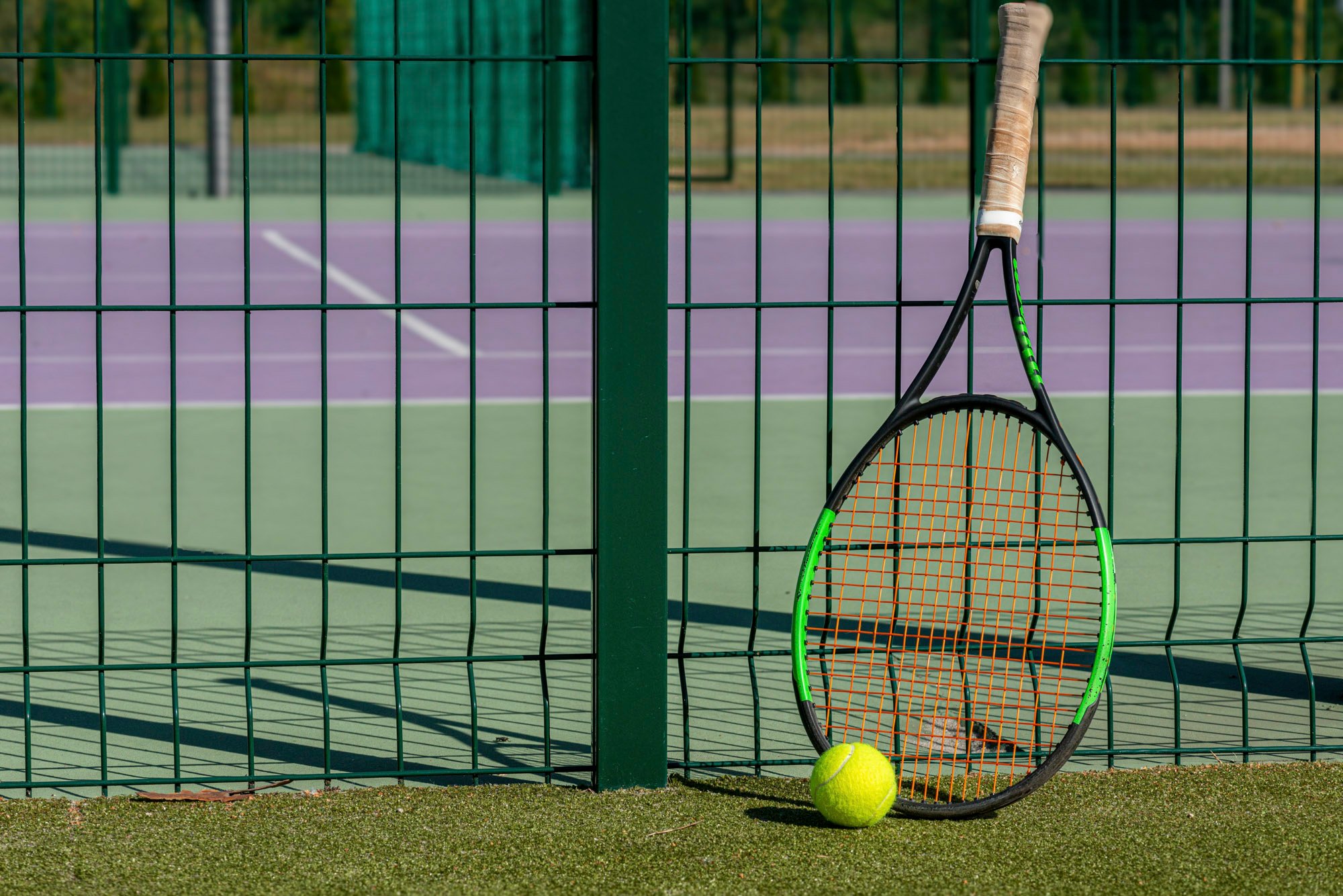
Few clubs anywhere offer members such choice. Hammersmith & Fulham Council lists 19 grass courts, nine artificial clay courts, eight artificial grass courts, four indoor acrylic courts and two mini courts for juniors, with floodlighting on several of the outdoor surfaces so play continues long after the summer evenings draw in.
The grass, though, is the heart of it. The lawns open in May and close for renovation at the end of September, and that short season is the product of a year of quiet, painstaking work. Each autumn the grounds team scarifies the courts, repairs worn baselines, top-dresses with specialist loam and overseeds before the rains arrive. Over the years they have raised the clay content of the soil to bind it and deliver the firm, true bounce good grass tennis demands, and in season the courts are mown to just a few millimetres.
The result is something close to a living postcard: freshly striped lawns, players in traditional whites, and the tennis pavilion, once known as the Tea House, standing on the site of the original 1869 shooting pavilion. It is tennis as it was meant to be played, a few minutes from the King's Road.
Wimbledon's Most Elegant Warm-up
For five days each June, Hurlingham becomes the most intimate venue on the professional calendar. The Giorgio Armani Tennis Classic, launched in 1994 as a final chance for leading players to adjust to grass before Wimbledon, sets up a compact grandstand around Centre Court and marquees across the grounds.
The guest list on court is remarkable. Novak Djokovic, Andy Murray, Rafael Nadal, Carlos Alcaraz and Pete Sampras have all played here. The 32nd edition, held from 23 to 27 June 2026, brought world number one Jannik Sinner to Fulham alongside Cameron Norrie, Casper Ruud and Stan Wawrinka, with Giovanni Mpetshi Perricard opening the week with victory over Learner Tien. Spectators watch from a few rows back rather than a few hundred feet, then drift off to supper in the clubhouse or a glass of something cold by the courtside bar. Norrie, for one, has called it among Britain's most iconic tennis venues.
Getting Through The Gate
For most Londoners, the Classic is the only way in. The club has around 13,000 members, and its waiting list has been closed since 2018; when places do arise, children and spouses of existing members are given priority. Membership has famously proved impossible to buy – the club's members are reported to have turned down an approach from Roman Abramovich that would have made each of them a millionaire.
The Courts Next Door
There is, however, another way to play tennis at Hurlingham. On the former polo ground next door, Hurlingham Park – a Green Flag-accredited public park of almost eight hectares – has three well-kept synthetic grass courts at its northern end, close to Hurlingham Road. They can be booked up to a week ahead through the LTA's ClubSpark system, are free to use between 7am and 9am every day, and host LTA-accredited coaching for adults and juniors. Changing rooms sit nearby.
It is a fitting arrangement. The park and the club were once a single estate, and on a summer morning the sound of rallies from the public courts carries across to the private lawns beyond the wall.
Living By The Lawns
That proximity is part of what makes the streets around Hurlingham so sought after. The roads between Hurlingham Park, Ranelagh Gardens and the river combine handsome period houses with the feel of a village, green space on the doorstep, the Thames at the end of the road, and Parsons Green and the King's Road a short stroll away. For residents who love the game, it offers something rare in any capital city: some of the finest tennis in the world, within earshot of home.