

Published: 7 July 2026
Through years of hard work and careful expansion, the vineyards in Kent have become some of the most important centres of English winemaking. Often referred to as the “Garden of England,” the county’s combination of chalk soils, gentle rolling hills and relatively mild climate has created favourable conditions for vineyards to flourish over the last half a century. These landscapes bear striking similarities to parts of northern France, particularly Champagne, which has encouraged producers to focus heavily on traditional method sparkling wines alongside an increasing range of still varieties.
Over the past two decades, vineyards across Kent have grown in terms of both scale and reputation. Some estates now distribute internationally, while others remain smaller, family-run enterprises offering both intimacy through their rustic setting, and a charming sense of local heritage which has defied labels of winemaking being nothing but a fad in this part of the world. For visitors, exploring the best vineyards in Kent provides a rewarding experience, discovering how English wine has evolved into a respected industry, and the following vineyards represent some of the most notable estates to visit across the region.
Chapel Down
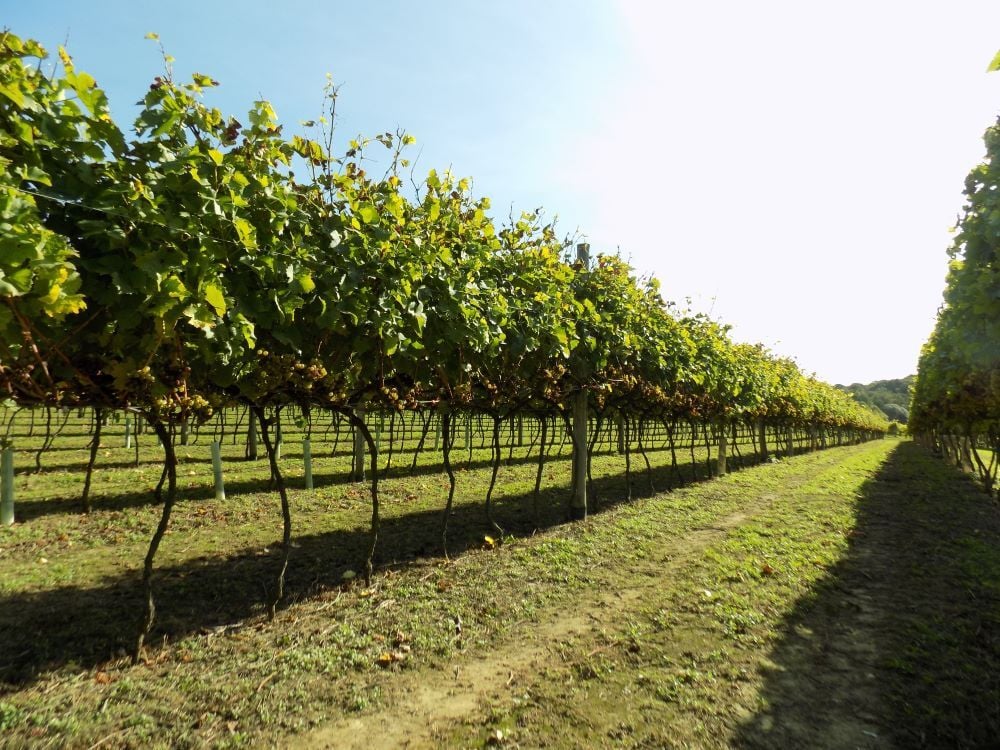
Rightly regarded as one of the leading names in English wine production over the last 40 years, and playing a central role in establishing Kent as a key wine-producing region, Chapel Down exemplifies the potential of wine production in England. The estate lies just outside the historic market town of Tenterden, nestled in the rolling countryside of the High Weald landscape defined by orchards, farmland and wooded hills, giving the area a distinctly traditional Kentish character.
A merging of two worlds between the previously established Tenterden vineyard and the evolved concept of a true sparkling wine-producing brand, Chapel Down has served as inspiration for almost every other prominent wine-maker in the country. It is notable for its chalk-soil, which produces both sparkling wines of exceptional minerality and finish, as well as still wines that are punctuated by ripe, Bacchus-type flavours. With more than 1000 acres under its stewardship, Chapel Down is the country’s largest wine producer, exporting over 1 million bottles in 2022 and very much setting the bar for its competitors throughout both Kent and the rest of the UK.
Gusbourne Estate
The Gusbourne Estate sits within a quiet corner of Kent near the village of Appledore, stretching across gently sloping farmland close to Romney Marsh. The estate has gained a strong reputation for both sparkling and still wines, helped by the region’s well-drained soils and Kent’s favourable growing conditions. The grounds of the estate have been documented for the use of wine production as far back as the early 15th century, cementing its pedigree as one of the country's most established terroirs. However, the current vineyard was not planted until 2004, yet Gusbourne’s reputation has flourished since then, and its wines are known for their exceptional quality.
It is potentially the country’s best-connected vineyard, accessible via direct train from London St.Pancras in a little under an hour after disembarking from Ashford International, then taking a 15-minute taxi ride to the estate. Gusbourne prides itself on its “Chefs Series”, a selection of bespoke fine-dining events that involve special tasting menus tailored by Michelin-starred chefs such as Tom Sellers and Adam Smith, for a more refined way to enjoy a visit to one of England’s most respected vineyards.
Balfour Winery
Located within the Hush Heath Estate near Staplehurst, Balfour was originally planted with vines in the early 2000s and has since developed into one of the county’s most beautiful vineyards. Its vines are spread across sheltered slopes surrounded by ancient oak woodland, with interconnected foot paths that traverse much of the Hush Heath Estate, and it remains one of the best vineyards in Kent for exploring entirely on foot. Balfour is also noted for its abundant wildlife, with the more remote rural setting a home for grazing deer and multiple birds of prey.
All of this can be enjoyed relatively up close and personal, but one of the highlights from the estate is undoubtedly “The View”, a building at the heart of the vineyard which functions as its visitors' centre and tasting room. As the name implies, it offers the most comprehensive views of the estate and vines, as well as its own kitchen-restaurant upstairs. Offering à la carte dining and particularly delicious Sunday Roasts, Balfour Winery covers all bases for a visit to this stunning part of wild and rugged Kent.
Westwell Wine Estates
Westwell Wine Estates lies near the North Downs, close to the town of Ashford, offering fantastic connections to London by train at Ashford International. The vineyard sits on chalk-rich soils that mirror those found in many of the best vineyards in Kent, and the surrounding countryside consists of similar gentle rolling hills and woodland. It conveniently sits on the “Pilgrims Way”, a historic footpath that routes to Canterbury and its signature cathedral.
Westwell is a noteworthy destination for its low-intervention and experimental winemaking, showcasing unique styles like skin-contact orange wines and clay-aged bottles that break from conventions established through much of Kent. The estate further distinguishes itself with rotating weekend street food pop-ups and creative workshops, while its flagship sparkling wine, Pelegrim (old English spelling for pilgrim in a nod to the estate's location), has earned critical international acclaim for its taste and structure.
Barnsole
Barnsole Vineyard lies within a quiet rural area near the village of Staple, not far from the historic city of Canterbury. The vineyard is relatively small compared with some of the larger estates in Kent, yet it offers an intimate experience that highlights the personal nature of family-run winemaking, providing an authentic look at small-scale production. The vineyard also carries a unique sense of history, situated near the ancient Roman fort of Richborough on land that has been farmed since antiquity and possibly even cultivated ancient Roman vines. Because the winery produces a limited number of bottles each year, visiting is the only way to taste their wines, which are sold almost exclusively from the cellar door.
Its most noteworthy product, Wrotham Pinot, is a unique and mysterious grapevine discovered growing wild on a cottage wall in the village of Wrotham, Kent, during the 1940s. It is widely considered to be a distinct local mutation of the Pinot Noir grape, distinguished by its woolly silver-haired leaves and its remarkable resilience to the damp English climate. This variety is particularly noteworthy because it ripens approximately two weeks earlier than standard Pinot Noir and possesses a natural resistance to certain fungal diseases. While it remains a rare speciality, vineyards like Barnsole have experimented with it to produce wines that offer a remarkably unique connection to the history of English viticulture.
Simpsons’ Wine Estate
Simpsons’ Wine Estate, established in 2012 in the Elham Valley, is a family-run producer that blends French winemaking expertise with the unique chalky terroir of the North Downs. The estate is particularly famous for using specific Burgundian clones to create premium labels like their white Pinot Meunier. The hallmark of the estate itself is its glass-fronted tasting room overlooking the production area and a nine-metre silver helter-skelter slide that transports guests down to the winery floor. Being so guest-led, the estate offers various guest experiences, such as the popular sunset sessions that include a walk through the Roman Road and Railway Hill vineyards, followed by tutored tastings.
Unlike many English vineyards that focus almost entirely on sparkling wine, Simpsons is a leader in still wine production, such as its Roman Road Chardonnay, known for its elegant minerality, citrus notes, and delicate, toasted oak finish. It caused a stir in the industry by being named one of the top 50 wines in the world at the Decanter World Wine Awards, a rare feat for an English still wine. In addition to their Chardonnay, they are also celebrated for the Derringstone Pinot Meunier, a "blanc de noirs" style sparkling white wine, which is made from red grapes. This unique offering is prized for its creamy texture and complex orchard fruit flavours, showcasing the estate's ability to break from the mould and produce alternative high-quality still wines that exceed some of the sparkling creations found in the region.