

Published: 27 February 2026
A cross between industrial maritime heritage, footballing zeitgeist, and music legend, Liverpool really does have it all. As one of the most important cities in the United Kingdom from the Industrial Revolution to the present, Liverpool has cemented its status as a global destination for both the aforementioned areas and plenty more. Truly unique in terms of culture within the UK's many charming and characterful communities, Liverpool and its inhabitants are a league unto themselves.
Split by the river Mersey, the city’s population are affectionately known as “Scousers” – after the Scandinavian seafood stew “lobscouse”, which was an imported local staple during the early 20th century – and they are defined by their signature accent and colourful personality. A warm and welcoming city, Liverpool has been recognised internationally as a city of culture and is brimming with activities for a city break to explore some of its most famous and lesser-known attractions.
Albert Dock and the Royal Albert Dock Complex
Originally opened in 1846, the Albert Dock was nothing short of revolutionary, creating one of the first non-combustible dock systems in the world. Designed by Jesse Hartley and Philip Hardwick, its vast warehouses once stored goods from either end of the Atlantic Ocean, and it was one of the British Empire’s most prominent ports. Today, the dock remains one of the great examples of maritime innovation and serves as a major hub for everything from maritime heritage to modern art in its current state.
The Tate Liverpool occupies one of the former warehouses, while the Merseyside Maritime Museum provides context on everything from transatlantic trade to the infamous R.M.S Titanic’s connections to the city. The area is filled with independent stores, cafes and restaurants, and is easily explorable on foot, making it one of the more commercial areas in the city that hasn’t let go of its historic influences, including some of its most famous faces.
The Beatles Story and The Cavern Quarter
Liverpool’s global identity is inseparable from The Beatles, and nowhere explores that legacy in more depth than The Beatles Story at Albert Dock. The exhibition is chronological and highly detailed, tracing the band’s early years in post-war Liverpool, their Hamburg residencies, and their inevitable rise to global dominance. Original instruments used by the quartet, as well as handwritten lyrics, and immersive reconstructions, provide a treasure trove of artefacts for fans of the original supergroup to fixate on.
A short walk away, the Cavern Quarter remains the emotional centre of the city’s music scene, and a major pilgrimage site for fans of the Beatles from around the world. Mathew Street is dominated by the Cavern Club, renowned for its connection to the band’s first performances and rebuilt on its original site, still hosting live music daily. While the crowds are constant, the surrounding streets also house smaller venues, record shops, and long-established pubs that reflect Liverpool’s wider musical output beyond The Beatles alone, but showing the spirit of their ventures remains firmly intact.
Liverpool Waterfront and the Three Graces
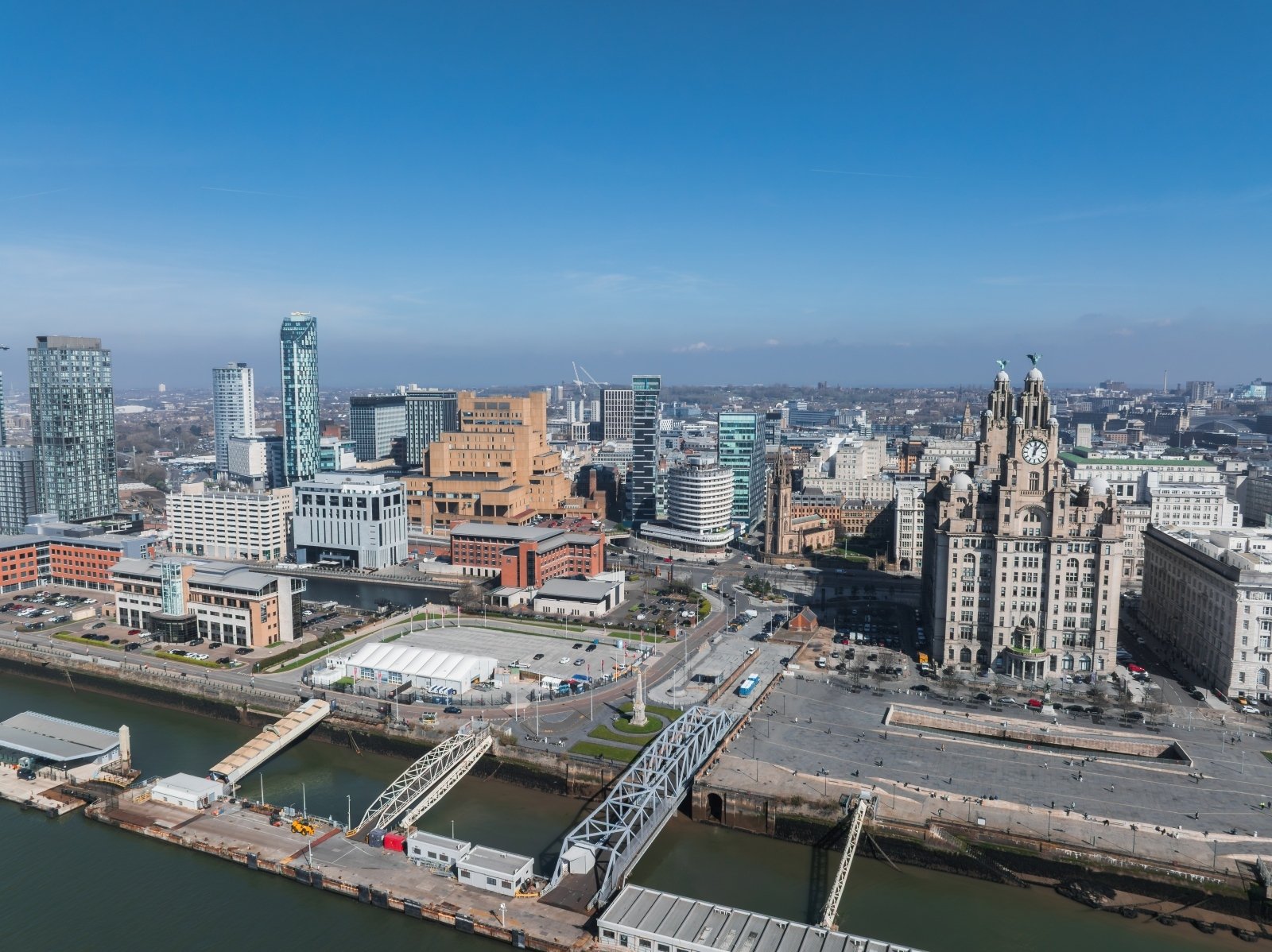
The UNESCO-listed city waterfront is defined by a trio of man-made constructs known colloquially as the Three Graces. These are the Royal Liver Building, the Cunard Building, and the Port of Liverpool Building, all constructed in the early twentieth century. These monumental structures symbolised the city’s maritime dominance at a time when Liverpool handled a significant proportion of global trade. The Liver Building, with its famous clock towers and sculpted Liver Birds that give the city its name, remains one of Britain’s most recognisable civic landmarks.
Exploring the waterfront on foot is one way to appreciate the sheer scale of the city’s former maritime operations, but the best way has to be by boat. River Mersey ferries continue to operate from Pier Head, offering short crossings and circular cruises that provide a different perspective on the waterfront, now far less busy than it was a century ago. It’s a small stretch of the imagination to envision just how clogged the water along the city would have been with trade vessels flooding the docks from all over the world, but with the Three Graces for scale comparison, it’s hard to escape the sense of importance that this part of the city once had on the world’s stage for global trade.
Liverpool Cathedral
Designed by Sir Giles Gilbert Scott, Liverpool Cathedral is the largest of its kind in Britain and one of the largest in Europe. Construction began in 1904 and continued for more than seven decades, resulting in a vast Gothic structure that dominates the city skyline, rivalling the likes of St.Paul’s in London, and further exemplifying the city’s importance during the early 20th century.
The Cathedral’s exterior is made up of a sculpted sandstone façade and immense central tower, giving it a commanding presence, while the interior emphasises its status as the largest in the country with voluminous ceilings. Visitors can explore the main nave, side chapels, and the cathedral’s extensive stained glass array, whilst ascending the tower offers panoramic views across Liverpool, the River Mersey, and even as far as North Wales or the Isle of Man on clear days.
Crosby Beach and Antony Gormley’s Another Place
For a chance to explore the coastline of this northwestern corner of the UK, a short journey north of the city centre, Crosby Beach offers a stark contrast to Liverpool’s dense urban jungle. The wide, windswept shoreline along the Irish Sea boasts wonderful views and is an idyllic pleasure spot during the warmer months of the year. Unlike traditional resort beaches, Crosby remains largely undeveloped, retaining a raw, elemental quality shaped by tides, weather, and shifting sands, that’s beautifully unspoilt.
The beach is best known for Another Place, Antony Gormley’s installation of 100 cast-iron figures positioned along the shoreline and out to sea. Each figure faces the horizon, gradually submerged or revealed as the tide changes. The work interacts directly with the landscape, turning a simple coastal walk into a slow, reflective experience that connects art, geography, and natural movement, and remains one of the most powerful outdoor installations in the UK.
Everton Stadium at Bramley-Moore Dock and Anfield Stadium
Liverpool’s football identity is the stuff of legend. Whilst the city’s eponymous team is one of the country’s most successful clubs, celebrated around the world for their sporting achievements, rival city club Everton also boasts an impressive history as one of the oldest teams still competing at the top of the footballing pyramid. Both teams are continuously defined by their stadiums; they play to crowds in the tens of thousands for each match. For over a century, Anfield has remained the historic heart of Liverpool FC. The stadium tour explores this continuity, moving from early club history through European dominance to the modern era, with a focus on how the ground itself shapes matchday culture and life in the surrounding area as the stadium continues to develop.
In contrast, Everton’s new stadium at Bramley-Moore Dock represents a significant shift in scale and ambition. Built within a former dock structure, the development integrates industrial heritage with modern engineering, reactivating part of the city’s historic docklands while providing a new focal point on the waterfront for everything from shopping to matchday fixtures and music events. Touring both grounds offers a rare opportunity to compare tradition and reinvention side by side, illustrating how sport continues to influence Liverpool’s cultural image and urban development.