

Published: 26 March 2026
Holland Park provides day-to-day livability in a way few London neighbourhoods manage. Long valued for its calm relative to surrounding districts, the area allows residents and visitors to move easily between landscape and city life.
In this guide, we explore the best things to do when in Holland Park.
History
The park itself spans around 54 acres, making it one of the Royal Borough of Kensington and Chelsea’s largest green spaces and sits on land once belonging to the Jacobean mansion, Holland House. Much of the house was destroyed during the Blitz in 1940, but its ruins remain a defining feature, steeping the park’s atmosphere in British history.
The surrounding neighbourhood developed rapidly during the 19th century as London expanded westwards, attracting artists, writers and wealthy patrons drawn by its proximity to green space, with the legacy still shaping the area today. Holland Park sits between the residential streets of Kensington and South Kensington’s museums, giving it an unusually layered character of part village, part cultural quarter and part working public park.
Explore Kyoto Garden
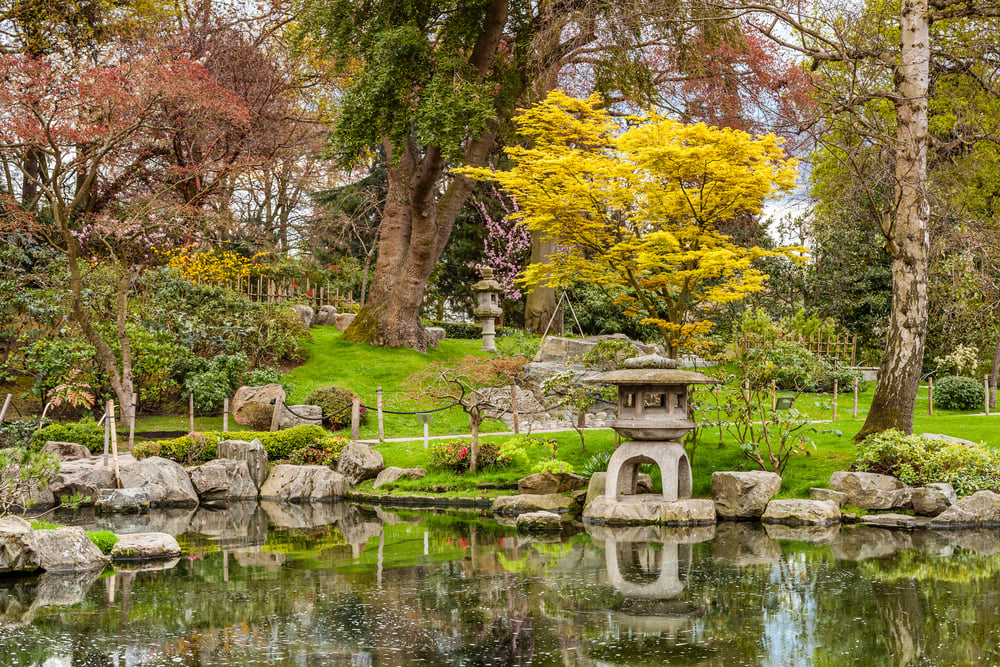
Kyoto Garden is Holland Park’s most transporting corner, a compact landscape of waterfalls, koi-filled ponds and stone lanterns that feels improbably far from west London. Opened in 1991, it was donated by the Kyoto Chamber of Commerce and created as a gesture of goodwill, designed and built by a Japanese designer and his team in collaboration with the Royal Borough of Kensington and Chelsea. Despite its somewhat modest scale, it carries all the visual signatures of a traditional Japanese garden, from cherry and maple trees to the tiered cascade that draws visitors instinctively towards the bridge.
At peak times, queues can form for photographs at the waterfall, but for those who arrive early, the garden returns to what it does best, which is a brief and restorative sense of order and calm. A later addition, the Fukushima Memorial Garden, opened in 2012 to recognise British support after the 2011 Tōhoku earthquake and tsunami, deepening the garden’s significance beyond aesthetics. Visiting in spring for the blossoms or in autumn for the burnished colour of the maples, it rewards one with the rare feeling of stepping into a different rhythm of London.
Discover The Leighton House Museum
Tucked behind Holland Park, Leighton House Museum is one of London’s most remarkable surviving artist homes. It was built for the Victorian painter Frederic, Lord Leighton as both a residence and a place to work and entertain, beginning in the 1860s and expanding steadily over the following three decades into a carefully orchestrated expression of ambition, taste and collecting.
The house offers an unusually intimate view of a public figure’s private world. From the lofty studio spaces to the jewel-like Arab Hall, it reveals how closely Leighton’s domestic life was entwined with his artistic identity. The Arab Hall remains the most striking room, its turquoise tiles, intricate ornament and central fountain forming a dramatic contrast to the London streets outside. Elsewhere, richly coloured interiors are layered with sculpture, painting and decorative detail. Part museum and part time capsule, Leighton House stands as a reminder that for its creator, the home was not merely a setting for art, but an extension of it, shaped with the same deliberation and theatricality as the works produced within its walls.
Experience Holland Park’s Opera House
Opera Holland Park is London opera at its most assured, staged each summer in a covered open-air theatre set against the bomb-scarred remains of Holland House, a Jacobean mansion largely destroyed during the Blitz. Founded in 1996, the company has turned a site marked by wartime loss into one of the capital’s most distinctive cultural settings, earning a reputation for strong musical standards and a house style that prioritises clarity, atmosphere and scale.
Marking its 30th anniversary in 2026, Opera Holland Park presents a season shaped by deception, disguise and the unsettling sense that nothing is quite as it first appears. Puccini’s gold-rush drama La fanciulla del West follows Minnie Falconer, a pistol-packing saloonkeeper who falls for a stranger with a past, while Mozart and Da Ponte’s Così fan tutte frames romantic certainty as experiment, with two sisters and their lovers edged towards betrayal by a knowing maid and a cynical manipulator. The programme also includes the UK premiere of Ryusuke Numajiri’s The Bamboo Princess, launching a new partnership with Japan’s Yachiyoza Theatre, alongside a revival of Verdi’s Un ballo in maschera and a new English-language Die Fledermaus.
Visit the Design Museum
The Design Museum in Kensington is one of London’s most engaging spaces for contemporary culture, bringing together product, fashion, graphic and architectural design under one roof. It operates as a registered charity, with ticket income supporting the museum’s programme of exhibitions and commissions and in 2018 it was recognised with the European Museum of the Year Award.
Its calendar is designed to reward repeat visits, shifting between major ticketed shows and free displays that explore how design shapes everyday life. Current highlights include Blitz: the club that shaped the 80s (until 29 March 2026) and Wes Anderson: The Archives (until 26 July 2026), alongside free installations such as Tools for Transition and the museum’s permanent collection display, Designer Maker User.
Dine at Belvedere Restaurant
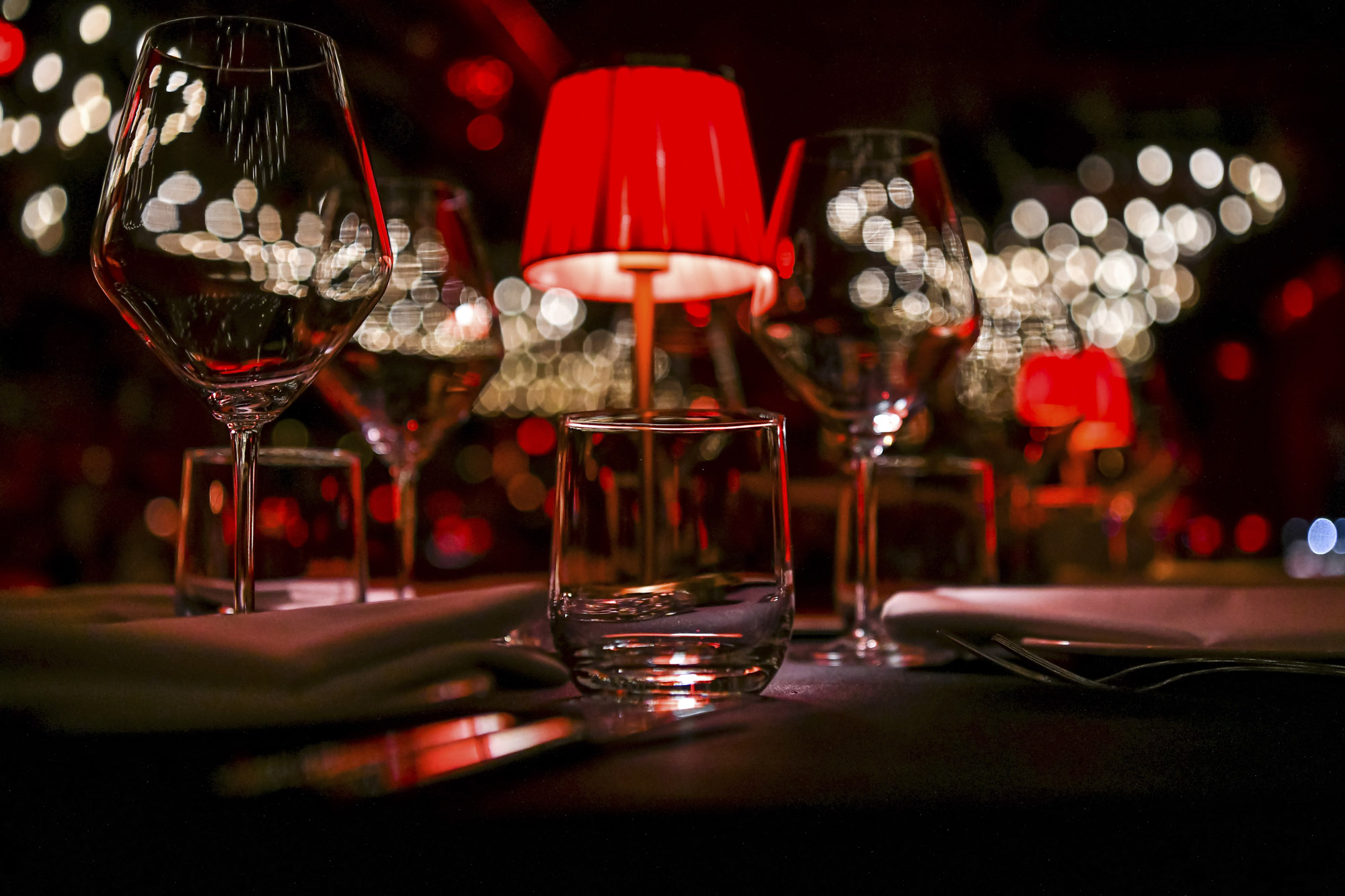
Belvedere sits inside the gardens of Holland Park, a restaurant with a past that feels unusually vivid even by London standards. It is said that poet Byron met a lover here, politician and playwright Richard Brinsley Sheridan once stayed too long and the Queen Consort’s mother hosted a society ball as ‘Debutante of the Year’. The building’s history is part of the appeal, but so is its location, tucked within one of the city’s most atmospheric parks, where dinner can feel a world away from the streets beyond the gates.
The cooking is led by head chef Lello Favuzzi, who brings the flavours of his native Sardinia to the table, shaped by a focus on seasonality. His approach leans into careful sourcing, drawing on small-scale suppliers and ingredients from across Italy, including Sicilian black winter tomatoes, Veneto radicchio tardivo and porcini mushrooms from Umbria. Dishes include Apulian burrata, bluefin tuna tartare and wild seabass ceviche, alongside richer comfort notes such as pumpkin and taleggio ravioli finished with amaretti and coffee crumble.
From its acres of gardens and war-scarred ruins to open-air opera seasons, international museums and dining, the area continues to refresh itself while staying rooted in what truly makes it distinctive. As London grows louder and denser around it, Holland Park’s future lies in that same balance, a place where one can drift between art, food and nature in the space of an afternoon and still feel properly in the city.