


Published: 18 December 2025
At the Paris World’s Fair in 1900, Ferdinand Porsche dazzled the world with his working model for a hybrid Four Wheel Drive vehicle. Using a conventional gasoline-powered engine that generated electricity to drive each of the wheels via an electric motor, Porsche’s model inspired many other imitations of a hybrid or pure electric 4x4, but it would take more than a century for the first of these vehicles to debut on the commercial market.
The rise of sophisticated battery cooling systems, scalable skateboard chassis designs and high-density lithium cells made serious electric 4x4 engineering viable. Today, electric 4x4s are no longer experimental, but are fast-growing in popularity, particularly for the family vehicle market. Quiet, quick, and packing plenty of space and safety features, the combination of energy efficiency and eco-friendly features is one of the key factors driving the demand for these machines. The following suggestions are amongst the very best the market has to offer in the electric 4x4 range.
BMW iX Series
The iX is BMW’s flagship electric platform and a leader in what the world of sustainable motoring can look like. Interior materials include recycled textiles with leather alternatives and open-pore wood, creating a calm driving environment. Seats offer heating, ventilation, massage and multiple adjustment profiles, while the rear provides generous space for passengers. Storage is expansive, including a deep boot and a central area designed for bags, tablets and toys. Acoustic insulation is excellent, supported by double glazing and noise-managed suspension mounts, ensuring that this will be a prime nap-time spot for younger (or even older) members of the family.
The xDrive50 and M60 models deliver strong performance, combining dual-motor systems with excellent control. Adaptive air suspension and rear-wheel steering help increase both agility and stability, while regenerative braking is adjustable to suit driving preference. Range capability exceeds 400 miles, and the charging system accepts high-speed inputs for quick top-ups on long trips, whilst efficient at home power sources should be able to fully recharge the vehicle in under 11 hours. Well built and well-equipped with safety measures, including blind-spot technology, the iX’s reputation for family usage is merited, for both comfort and style.
Also Read: Most Expensive BMWs of All Time
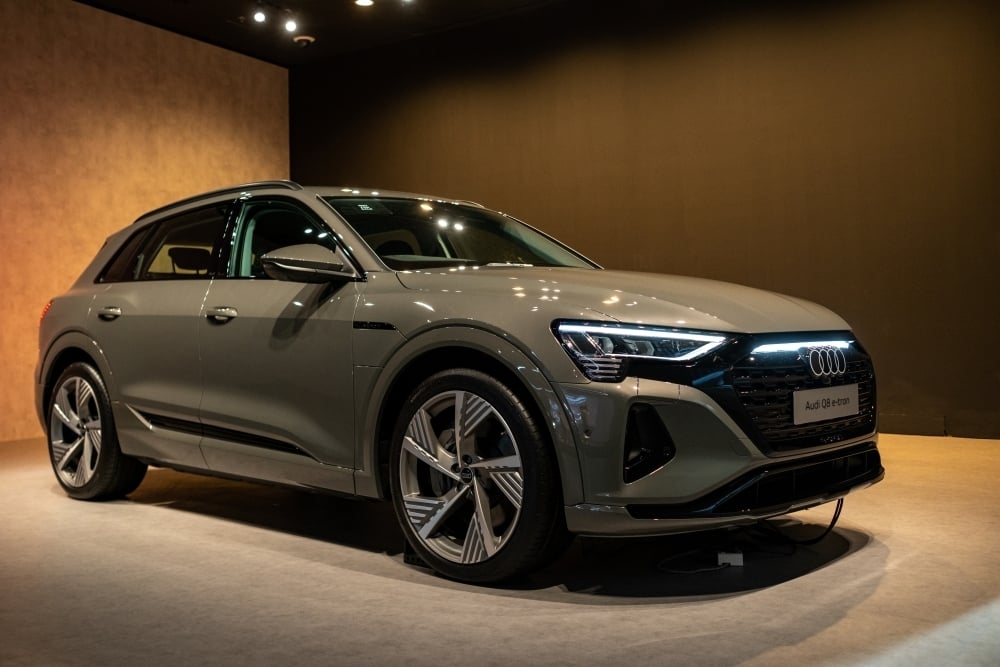
Audi Q8 e-tron
The early designs for what the future of electric cars looked like completely neglected to incorporate curvature into the equation. However, the Audi Q8 e-tron continues the legacy of magnificent curved bodywork that has become a key part of the manufacturer's brand identity for decades. The vehicle looks so similar to its petrol-guzzling sibling models that one could be forgiven for assuming that this wasn’t an e-vehicle just on looks alone. For those petrol-heads still not fully sold on the conversion to a lower-emissions alternative, driving the e-tron is possibly the next best thing.
Performance, compared to a petrol or diesel engine, is much more measured but still confident. Dual or triple motors provide strong torque delivery, especially in the S models with optional torque vectoring across the rear axle. Air suspension creates a smooth, controlled ride, and steering is calibrated for predictable handling, improving driving efficiency across the board. The Q8 e-tron boasts a shorter range of up to 360 miles, but a reduced home charging time of up to 9 hours, depending on socket efficiency, more than compensates for this. It excels at longer drives with well-timed rest stops at EV charging stations, ready to roll again within half an hour, and carry the family home.
Also Read: The Most Exotic Sports Cars 2025
Jaguar I-Pace
The I-Pace is smaller than its competitors on this list but delivers a focused, high-quality performance and could be seen as a suitable “sport” alternative to the more spacious entries on this list. Thanks to the flat battery, the floor generates sufficient legroom without compromising headroom in the back, making it perfectly comfortable even for adults in the rear seats despite its smaller comparative size. The boot is practical and shaped to allow pushchairs or luggage, and smaller storage areas are well distributed around the cabin.
However, the area where the Jaguar really shines, as already mentioned, is through its performance. The dual-motor system delivers fast acceleration with immediate torque and a greater sense of stability thanks to its lower centre of gravity, compounded by the light steering and controlled suspension. The I-Pace is a dream to drive on long, winding roads, with enough range to conquer most drives off the beaten track and a stable charging time at home (292 miles max range and 9-12 hours home charging depending on efficiency). It’s a neat compromise as a practical and well-run electric model that doesn’t sacrifice any of the enjoyment of driving.
Also Read: The Best British Cars of All Time
Volvo EX90
Volvo is well-known for bringing Scandinavian sensibilities to its cars. Spacious, softly-furnished, and sensibly constructed, technology is integrated smoothly into their vehicles without overwhelming their driver, and the Volvo EX90 is no exception. Boasting up to seven seats and plenty of luggage room still in the back, the EX90 is the perfect family car for those living in well-equipped urban zones who love to escape into the outdoors and weather all elements and terrain.
Performance notes include strong power delivery and efficient air suspension to help with maintaining composure on varied road surfaces. Whether tarmac or gravel, the vehicle is calibrated for stability, safety and low stress rather than outright speed. The vehicle can range for up to 300 miles, with a recharge rate at home of between 10 and 17 hours, depending on socket efficiency, requiring owners to be diligent in charging overnight. competitive, and Volvo expects owners to rely on home overnight charging patterns. It’s a true family car, built for all manner of adventures (provided they’re within reasonable distance of an EV charger) and sure to hold many great memories in its lifespan.
Rivian R1S
The R1S is built around adventure-capable engineering, offering a much more rugged EV that boasts genuine off-road ability and the durability to manage it. In this vein, it’s built to be robust, offering supportive and spacious seating that’s focused more on these hallmarks than out-and-out comfort. Old-school 4x4 enthusiasts will appreciate the more analogue feel to the controls and the very hands-on driving experience, which undercuts its status as an electric-only vehicle.
Performance is as robust as its construction, with quad-motor systems offering immense torque, rapid acceleration, yet extremely precise control to handle all that power. The suspension can adjust for height and stiffness, and the chassis uses intelligent traction systems for difficult terrain, making it a favourable alternative to traditional off-roaders. Despite its size, the R1S is surprisingly agile and smooth to drive in high-speed lanes. Range varies by configuration, and this is one entry into our list that offers genuine towing performance. Families who are true enthusiasts for wild times in the great outdoors will feel right at home with the Rivian.
Tesla Cybertruck
Arguably, the most divisive car of the decade, never mind EV or 4x4, the Cybertruck offers a very different interpretation of an electric family vehicle. The cabin uses wipe-clean, hard-wearing surfaces designed for heavy use, with large seating areas and, despite its somewhat infamous reputation in pop culture, remains very practical. Storage is extensive, including a lockable bed, cargo tunnel and under-floor spaces. The cabin design is futuristic, angular and yet functional, with a fascinating onboard tech layout that belies its sci-fi design and aesthetics.
Performance is startling, with dual or tri-motor systems delivering both immense acceleration and towing capability, with 0-60mph possible in 2.6 seconds. Steel body panels resist dents and corrosion, and adaptive suspension allows height adjustment for off-road terrain. On the road, the Cybertruck offers stability and a quiet, composed ride, despite its appearance being reminiscent of sci-fi films. The range potential is extraordinary in customised models, up to and exceeding 400 miles, but with a trade-off of an average charging cycle at home of 12 hours, depending on socket efficiency.
Also Read: Tesla’s 5 Most Expensive Cars