

Published: 27 February 2026
Cornwall’s coastline is defined by its rugged and imposing geology more than anything else. Granite headlands, serpentine cliffs, vast sand dunes and narrow Atlantic coves combine to create one of the most dramatic and imposing coastlines in Europe. Consequently, Cornwall is often regarded among the most beautiful to boot, and that’s without factoring in its myriad of sandy, pebbly, or jagged stretches of beach.
From the iconic coves on the Lizard Peninsula to long flat sands at the mercy of the tides spanning both the south and north coast, Cornwall is a haven for seaside escapes and sandseekers looking to enjoy the natural blessing bestowed upon the region. The land may end in Cornwall as far as the UK’s geography is concerned, but its beaches begin here.
Kynance Cove
Kynance Cove sits at the western edge of the Lizard Peninsula, Cornwall’s signature serpentine rock formations that meet the open waters of the Atlantic Ocean, and is one of its most dramatic beaches. Whilst a little off the beaten track and requiring a 15-minute walk from the nearest car park, Kyance is well worth the visit thanks to its stunning location and crystalline waters in the summer. At low tide, the beach reveals itself in full, the waters retreating to uncover hidden rock pools and to extend the reach of the golden sand.
It is possible to visit at high-tide, but competition for spots on the beach is fierce, particularly during the peak season of summer. The Lizard Peninsula is a choice destination for walkers and nature lovers. Seal colonies can be seen basking in the sunshine atop the jagged rocks that scatter this part of the coastline, and the clear water is excellent for snorkelling. Swimmers should take care not to venture too far from the shore, as the coastline here is notoriously rife with rip tides, and Kyance Cove is unattended with regards to lifeguards.
Porthcurno
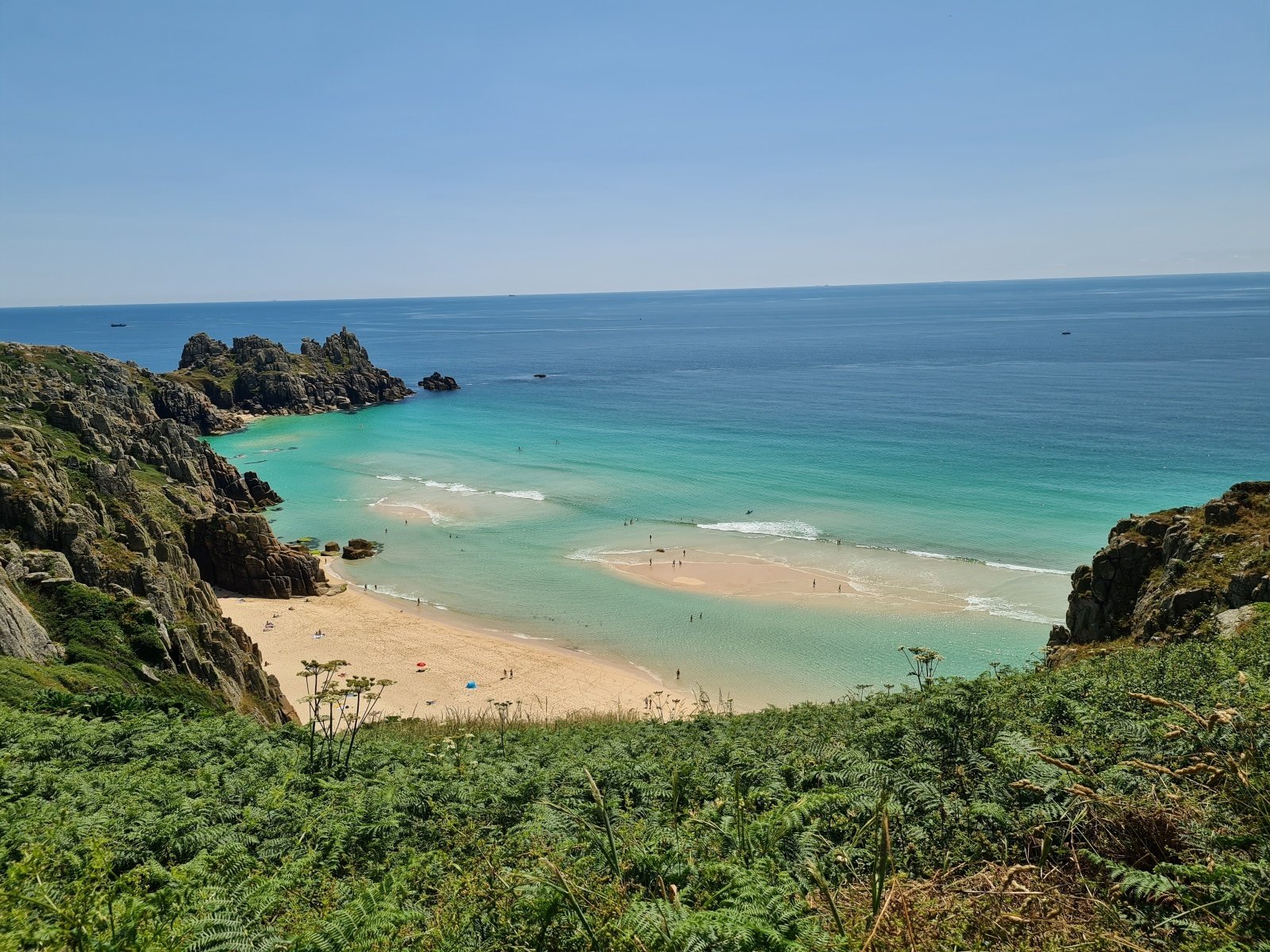
10 miles west from the popular seaside resort of Penzance, Porthcurno lies in a steep-sided valley where granite cliffs curve protectively around a wide arc of sand, making it one of the more sheltered spots on the Cornish coastline. The soft white sands and turquoise waters often elicit favourable comparisons with the beaches of the Caribbean, but the water temperature rarely achieves this tropical status.
One of the most curious and enticing aspects of Porthcurno lies above the beach. Cut somewhat precariously into the cliffside, the Minack Theatre, one of the UK’s most outstanding outdoor theatres, perches over the beach. Long summer nights are celebrated here with a frequent performance circuit of both concerts and live theatre, with multiple travelling groups of actors playing different works of William Shakespeare and other acclaimed playwrights. Sun and swim by day, indulge in the works of Britain's most famous bard by night, Porthcurno offers something very unique compared to many other beaches around the country.
Sennen Cove and Whitesand Bay
At the very western edge of Cornwall, Whitesand Bay stretches northwards from Sennen Cove in a long, open sweep of sand facing the full force of the Atlantic. This exposure brings consistent swell with waves breaking across the beach at considerable height and consistency, making it an ideal place for surfing. The sand is firm and golden underfoot, stretching the length of a full mile, and is ideal for comfortable walks even when the tide is high.
Sennen Cove is easily accessed by foot from the nearby car park, and despite its popularity with the surf community (there is a well-established surf shop and school for those wanting to learn by themselves), it draws in considerable crowds of visitors to Cornwall in peak summer. The Old Success Inn nearby is an idyllic spot to enjoy lunch or dinner after a day spent exploring the sands and cove of Sennen and Whitesand Bay.
Fistral Beach
Fistral is inseparable from Cornwall’s modern surf culture. Positioned on a headland west of Newquay, one of the county’s most prominent surfing towns, the beach curves around a broad bay that captures Atlantic swell with remarkable consistency. It’s a surfer’s paradise, with some of the best conditions throughout the year in the whole of the UK. When the tide retreats, the beach is more than a mile in width, offering plenty of opportunity to relax and paddle along the shoreline. Even without beaming sunshine, Fistral remains a prime destination for walkers and wave watchers throughout the year.
One of the most interesting facets to Fistral is the underwater reef just north of the headland. With the right swell conditions, this reef generates a monstrous wave known as “The Cribbar”. At over 30ft high, this is Cornwall’s signature big wave surfing spot, and easily in contention for the largest surfable wave in the UK. Crowds will gather in the right conditions to watch a few brave souls paddle out to try their skill at surfing this behemoth. It imbues Fistral with the kind of mythology that makes it the British equivalent of Mavericks big wave surfing spot in California.
Perranporth Beach
At low tide, the beach at Perranporth extends for miles, with broad, uninterrupted sand stretching north and south, straining the eyes. The beach’s gradual slope and open aspect make it popular for swimming and surfing alike, while the surrounding dunes soften the landscape and provide shelter from prevailing winds. It’s as picturesque as any of the beaches in Cornwall, but it offers a particularly charming attraction for families.
Chapel Rock is a natural tidal swimming pool that’s been in use for centuries. It provides safe swimming for adults and children, offering a magical first-time dip for families with small children, as the water warms considerably once the sea retreats, particularly on hot days. The pool is alleged to have garnered its name from the supposed landing of St.Piran, patron saint of Cornwall, and allegedly the builder of their first small chapel in the sand dunes nearby.
Porth Nanven
Porth Nanven is unlike almost any other beach in Cornwall. Rather than sand, the shore is covered in large, smooth granite boulders, shaped through thousands of years of tumbling cliffs and crashing waves. After a storm, the entire shore shimmers with glistening rock, giving the beach an ethereal, otherworldly quality as the dark rock glistens. It is this which has led to Porth Nanven being affectionately dubbed “dinosaur egg beach”.
With some stones dating back more than 120,000 years, the beach has special scientific preservation status, prohibiting any removal of rocks, no matter how big or small. Due to its status and small car park, the chance to visit here, particularly in the summer months, is quite restrictive. Swimming is also advised with caution, as the tides, submerged objects and potential rock falls after adverse weather can prove hazardous. However, for spectacle and exploration, Porth Nanven remains one of Cornwall’s most characterful beaches.