

Published: 24 December 2025
St John’s Wood is one of London's most affluent and coveted neighbourhoods, thanks to its Georgian terraces, Victorian townhouses and more modern mansions that exude prestige and superior quality. It's a removed community from the rest of the city, village-like in feel, with a reputation that long predates the area's association with the most important band of all time.
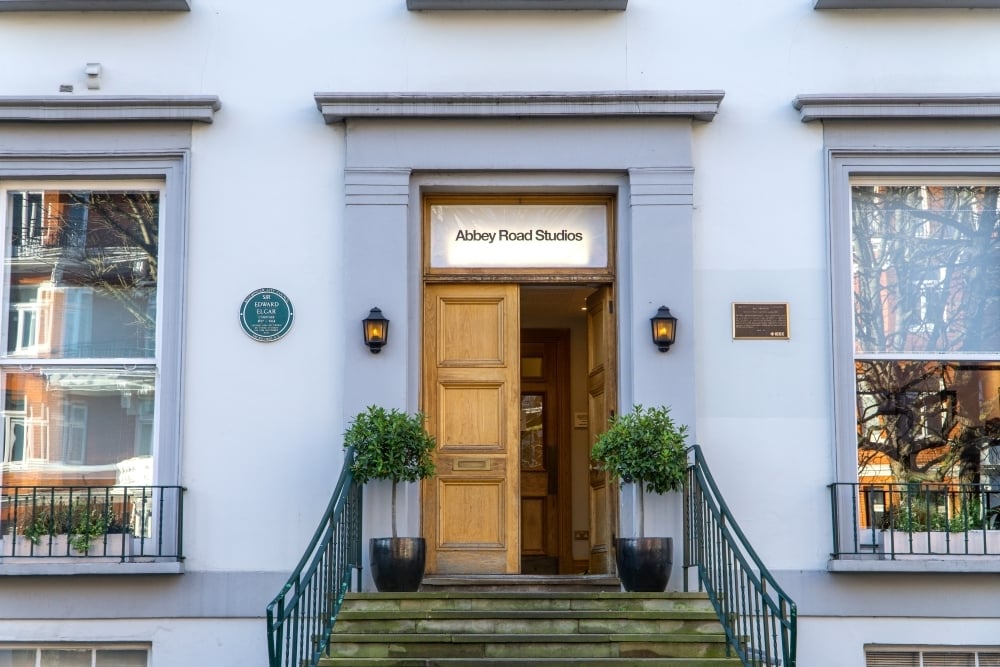
Like the majority of the buildings around here, Abbey Road Studios was originally built as a private residence in the early nineteenth century, set behind a quiet residential street with no hint of what its legacy would be today. Beyond its association with The Beatles, Abbey Road is an important pillar in music history, famous for innovating both sound engineering and the art of performance, for much longer than many may realise.
A Classical Foundation
When The Gramophone Company acquired the property in the late 1920s, London was already a global hub for classical performance, but recorded music was still shaped by the technological limitations of the day, and the idea of a purpose-built recording complex was ambitious, to say the least. The company committed to a full redevelopment of the house and its grounds, turning domestic bliss into sound-engineered rooms with precise acoustics, and spacious enough for the substantial equipment required to capture orchestral sound. When EMI officially launched the studios in November 1931, opening with a recording session conducted by Edward Elgar, it marked the first time an institution had been designed entirely around the recording process, rather than adapting performance spaces to suit purposes.
The early decades of Abbey Road were defined by their relationship to classical music and large ensemble recording. The studios became known for handling the weight and complexity of orchestral dynamics at a time when audio capture was still undeveloped. Producers, engineers and studio managers worked in close collaboration to push the medium forward, and the building soon attracted major artists who recognised that the studio environment was no longer a peripheral part of music-making but central to its evolution and essential to reaching what was becoming by now, a truly global audience via radio.
By the end of the decade, engineers inside the building were developing technologies that would later become standard in the industry, including early forms of stereo recording and mixing hardware that could handle large numbers of signals simultaneously. The outbreak of the Second World War forced a shift in priorities, but Abbey Road played its part through continued recording activity even during the height of the Blitz. Producing government broadcasts, big band performances and wartime messages alongside its more traditional musical work, the studio had to operate cautiously under blackout conditions in a city repeatedly subjected to attack. Still, Abbey Road weathered the storm and, with the end of the war, a new dawn emerged at the recording studios.
From The Blitz to the Beatles
Whilst the effects of near constant attack on London were devastating for many parts of the city, Abbey Road was fortunate enough to be spared from the worst of the bombing. The post-war period saw a change in listening habits, with radio technology becoming more portable, and musical taste expanding beyond orchestral, thanks to the introduction of Rock n’Roll in the United States. Abbey Road’s spacious Studio Two began to attract artists interested in expanding out into this burgeoning new genre and its technical department evolved the equipment required to support them.
This would lead to Abbey Road’s most famous period, beginning in the early 1960s, centred around the work of The Beatles, who used the studios not only as a facility but as an experimental environment that led to them creating some of their most significant work. Their producer, George Martin, encouraged the group to treat the studio as a compositional tool in itself, leading to many innovations that pushed far beyond the constraints of live performance. As the band’s reputation grew, so did the studio’s, reinforced by the eponymous 1969 album and its cover image of the zebra crossing outside the gates. So striking was the album that it succeeded in transforming what was once just a quiet residential street into a global music landmark, still visited by thousands of tourists each year to recreate the band’s iconic crossing.
Struggling to Keep Up with the Times
By the 1970s, the studio had accumulated not just a history but a brand identity, and EMI’s decision to rename the building Abbey Road Studios signalled a shift in mentality to elite-level recording status. Artists from across all genres sought to work in rooms that carried so much legacy and innovation, but the studio was careful not to become a museum or a gimmick for visiting artists. Through the late twentieth century, it diversified into film soundtracks, benefiting from its heritage of recording large-scale classical ensembles, with the ability to handle complex engineering requirements. Decade- defining films from Star Wars to Raiders of the Lost Ark were recorded with full orchestras, and the building was adapted to accommodate the demands of modern post-production.
Those decades also saw periodic uncertainty, both financial and technological, as digital recording threatened traditional studio work and the music industry wrestled with changing formats, budgets and distribution models. Abbey Road survived partly because it was not merely a place to rent equipment and pitch up to record, but as a result of decades of engineering expertise, acoustic design, and creative facilitation. With engineers trained in-house, custom technology continued to be built rather than purchased as standard, and the spaces, as much as the building’s reputation, continued to grow over time despite heavy nostalgia for the golden years.
Abbey Road Today
Abbey Road has had to reconcile a paradox in its legacy today. Although it is undoubtedly a global symbol of music history, it strives to remain active and relevant, lest it become a sort of living fossil. The building continues to host orchestral recording, pop sessions, and film work, but it also supports electronic production, mastering, immersive audio and experimental formats that move beyond stereo. Every day, musicians, producers and engineers all shuffle in through the door at all hours and carry on with their work. The persistent glow of the red recording light over the door to booths signals that, despite all the evolutions that it’s had to contend with, work at the studio continues, much as it had before.
Sitting behind its unassuming facade in this quiet part of London, globally recognised names such as Sam Smith, Dua Lipa and Travis Scott continue to record their latest albums at Abbey Road. Major films remain no strangers, with the likes of Barbie and Wonka having been composed here in the last few years alone. What started as a quiet townhouse continues to defy history as one of, if not the most iconic, recording studios in the world. But if you ask anyone privileged enough to work at Abbey Road, it’s nowhere near ready to sit back and rest on its laurels.